Games Like Palworld: Four Co-op Picks for Creature Work and Survival
For games like Palworld, pick Smalland if your group wants tameable mounts and a compact 10-player survival world, ARK: Survival Ascended for dinosaur taming with a big gap between private and public caps, The Planet Crafter for peaceful terraforming with 10+ friends, or Core Keeper for an eight-player mining-and-base loop. Each keeps a different part of Palworld's creature, building, or co-op appeal; none is a one-for-one replacement.
Official Steam descriptions, modes, Windows support and US base-game prices checked October 7, 2026. This is a source-based comparison, not a hands-on test. “Online co-op” means the checked Steam listing says so; it does not establish console cross-play, split-screen or server performance. Sale prices are dated snapshots before tax, not guaranteed checkout prices.
Choose the part of Palworld your group actually wants
Our original selection route is creature role → shared-world task → group cap → copy cost. Start by asking what the Pals do for your crew: are they companions to tame and ride, creatures that define an ecosystem, or not the point at all? Then name the job everyone wants to share—survival and building, changing a planet, or digging into a connected underground world. Only after that should you check whether the real group fits the documented mode and multiply the current per-copy price.
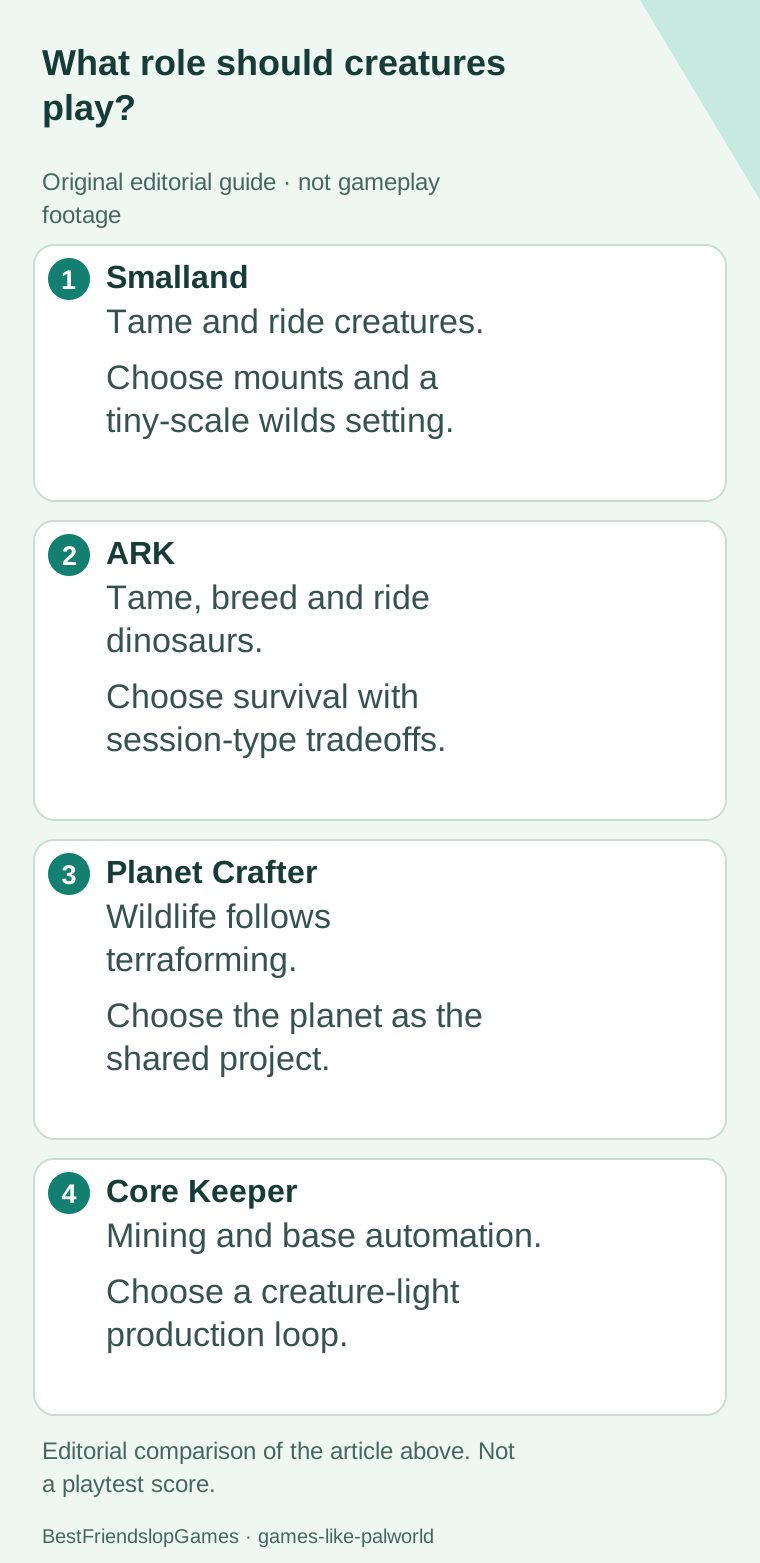
That order matters because “creature game” and “Palworld-like” collapse several different play patterns. Palworld's official Steam description combines survival, crafting and construction with Pals that can fight, be ridden, work at farms or factories, and support production. Those are separate hooks, not a single genre checkbox. The alternatives below preserve different subsets, and the table makes the tradeoffs visible instead of calling every creature title a clone.
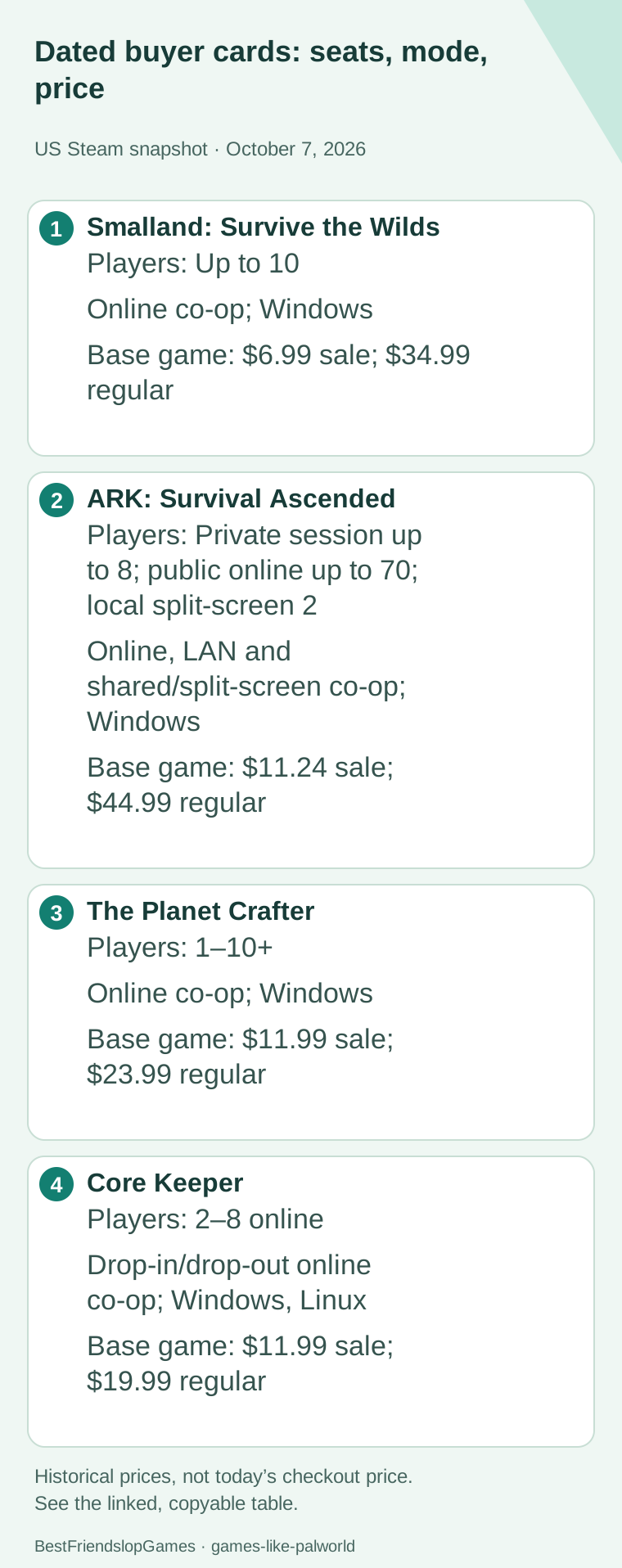
Copyable comparison: group size, mode, platform and US price
The official store links lead to each developer's Steam listing. Capacity and modes below are the developer-published Steam details checked October 7, 2026. Where a listing does not provide a numeric co-op cap in its description, we do not infer one. Prices are US-dollar snapshots; the regular price is shown beside the captured sale price so a temporary discount is not mistaken for the permanent budget.
| Official game | Documented co-op group | Mode and checked Steam platform | What the group does together | US base-game price checked October 7, 2026 |
|---|---|---|---|---|
| Palworld — reference | Up to 4 online co-op; up to 32 on a dedicated server | Online co-op; Windows | Pals fight, work, farm, produce and can be ridden | $20.99 sale; $29.99 regular |
| Smalland: Survive the Wilds | Up to 10 | Online co-op; Windows | Tame and ride creatures, gather, craft armor and build an encampment | $6.99 sale; $34.99 regular |
| ARK: Survival Ascended | Private session up to 8; public online up to 70; local split-screen 2 | Online, LAN and shared/split-screen co-op; Windows | Tame, breed and ride dinosaurs; gather, craft and build | $11.24 sale; $44.99 regular |
| The Planet Crafter | 1–10+ | Online co-op; Windows | Gather and build machines to terraform a planet and develop its biosphere | $11.99 sale; $23.99 regular |
| Core Keeper | 2–8 online | Drop-in/drop-out online co-op; Windows, Linux | Mine, farm, build, automate resources and explore underground biomes | $11.99 sale; $19.99 regular |
Budget examples use copies × captured US sale price, with no tax, DLC, hosting or account costs added: four Smalland copies = 4 × $6.99 = $27.96; eight Core Keeper copies = 8 × $11.99 = $95.92; ten Planet Crafter copies = 10 × $11.99 = $119.90. For ARK, eight private-session copies total 8 × $11.24 = $89.92; a 10-person group exceeds the listed private cap and would need a different documented arrangement, such as a public session. The public 70-player limit is not a promise about private-group settings, performance or safety. Recheck the store before buying because discounts can change.
Smalland: Survive the Wilds — keep mounts and creature-sized survival
Official facts: Smalland's Steam description says its online multiplayer supports up to 10 players. It describes taming and riding creatures, exploring a hazardous world, gathering or refining resources, building encampments, and crafting armor. The checked Steam listing identifies Windows and online co-op. The $6.99 sale and $34.99 regular price are the October 7 US snapshot above.
Our fit judgment: This is the clearest pick here when the memorable part of Palworld is moving through a survival world with creatures you can tame and ride. The scale changes—the developer frames its world as a “Land of the Small”—and its description does not promise Palworld's farm/factory work assignments or weapon-crafting loop. That distinction gives a group a concrete reason to choose it: creature traversal and encampment survival, not an assumed copy of Pal labor automation.
A group-useful check: Count all ten intended seats before a sale ends, then agree whether the session is about exploring, preparing an encampment or collecting a particular resource. This is our planning suggestion, not a tested optimal route or a claim that every activity requires all ten players. If the group wants individual companion progression or industrial production specifically, verify those exact systems in the store description rather than treating “tame” as proof of feature parity.
ARK: Survival Ascended: check the session type before the copy count
Official facts: ARK's Steam description names taming, breeding and riding many dinosaur species alongside exploration, crafting and building. It lists public online multiplayer for up to 70, private-session multiplayer up to 8, and local split-screen for 2. The Steam feature categories include online co-op, LAN co-op and shared/split-screen co-op. This check covers the Windows Steam edition only. On October 7, its US Steam snapshot showed $11.24 on sale and $44.99 regular.
Our fit judgment: ARK most directly shares Palworld's creature-centered survival vocabulary, but the numbers are not interchangeable. A small private group can compare the eight-player session; a ten-person group cannot simply use that private cap. The much larger public cap answers a different access question and does not guarantee that a public server behaves like a private friends-only world. Treat the session choice as part of the purchase decision, not fine print.
Before inviting the crew: Decide whether “everyone together” means a private session, a public server, LAN or two people on one screen. Then confirm settings, hosting expectations and platform compatibility on the current official listing. Our arithmetic deliberately excludes paid server hosting because no hosting charge is included in the checked base-game price. Do not turn the public maximum into a performance recommendation.
The Planet Crafter: turn creature progression into a shared world project
Official facts: The Planet Crafter's Steam listing explicitly describes online co-op for 1–10+ players on Windows. Its shared task is to survive on a barren planet, gather resources, build machines and increase heat, oxygen and pressure until the environment supports life. Its developer description includes creatures generated through terraforming progression and DNA mixing. The October 7 US price snapshot is $11.99 sale or $23.99 regular.
Our fit judgment: Choose this when the group wants the world itself to visibly change as the long-running project. It is the strongest fit in this comparison for a crew that wants less creature combat and more coordinated environmental transformation: the official listing calls it a chill experience with no violence. Its emerging wildlife is part of terraforming, not evidence of Palworld-style worker companions or a capture-and-ride roster. The shared reward is watching the planet change.
A useful division of labor: Before starting, let players choose whether they want to gather, build machines, explore wrecks or follow the terraformation milestones. That list is based on official described activities; our proposed role split is editorial advice, not a locked class system. For groups above ten, “10+” is the store's wording, not an exact ceiling we can responsibly calculate from this snapshot.
Core Keeper: keep the production chain, leave the surface behind
Official facts: Core Keeper's Steam page identifies a 1–8 player mining sandbox and drop-in/drop-out online co-op. It lists Windows and Linux. The developer describes mining, farming, crafting, building, resource automation, underground biomes and Titan fights. The October 7 US listing showed $11.99 sale and $19.99 regular.
Our fit judgment: Core Keeper is a strong alternative if your favorite Palworld evenings revolve around improving a base and turning gathered materials into useful equipment or automated production. It does not preserve creature riding as the primary travel hook; the shared world is an underground mining adventure. Its eight-player ceiling also makes headcount a simple early filter for larger crews.
Make the drop-in rule useful: The store specifically documents drop-in/drop-out online co-op and the ability to host a dedicated server. That can suit uneven attendance, but it does not establish what happens to every player's character, inventory or milestone when absent. Check the current developer instructions for those details before making a long-running save plan. The distinction between a documented access feature and a guessed save rule is why this page avoids promising more than the listing says.
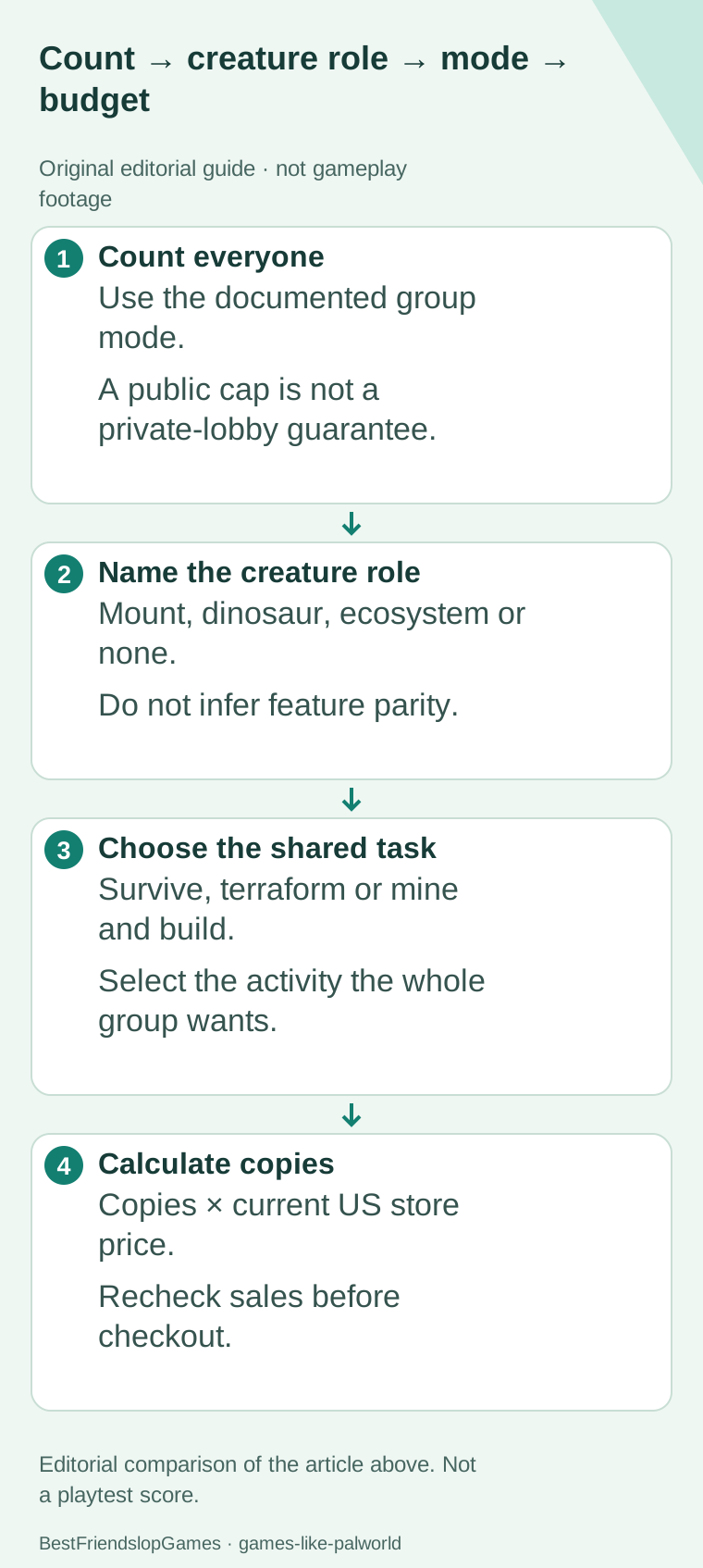
A one-minute decision for a Palworld group
Our original group filter is count → creature role → shared job → mode → budget. Write the actual headcount first, including friends who join less often. Circle whether companions, mounts, wildlife or creature battles are essential. Then choose the shared activity. Finally, confirm whether the intended online, LAN, local or private session really fits, and calculate the right number of copies using today's store price.
- We need ten seats and rideable creatures: start with Smalland's documented ten-player online group. If terraforming is more appealing than riding, compare The Planet Crafter's 10+ wording and shared environmental objective.
- We want dinosaurs, breeding and survival: ARK matches those official-described features, but choose deliberately between its eight-person private session and up-to-70 public online maximum. The latter is not the same as a private party.
- We like production and base upgrades more than creature collection: Core Keeper supplies an eight-player drop-in/drop-out world, mining and automated resource machinery. Do not buy it expecting mounts to be the main loop.
- We want wildlife to emerge as a world project: The Planet Crafter links terraforming milestones to life appearing on the planet. This is a documented ecosystem direction, not the Pal companion roster.
- We have a mixed group size: eliminate any cap that excludes the full intended party before comparing sale prices. Do not solve a seat problem by assuming mods, cross-play, server performance or local play that the source has not confirmed.
A reusable group shortlist
Before anyone buys, copy this four-line prompt into the group chat and let every player answer it: (1) How many people should fit in the same session on an ordinary night? (2) Are creatures companions, mounts, wildlife to discover, or optional scenery? (3) Which shared task sounds best: survive and build, change a planet, or mine and improve a base? (4) Is the group choosing private online play, a public world, LAN or one couch? Compare answers before comparing screenshots or sale banners. If two players want different creature roles, keep both options on the list until the group agrees on a common activity. Then multiply copies by the current US price and keep the regular price beside any discount. This is an original conversation aid, not a compatibility or performance test.
When the group wants different things
Do not settle a disagreement by asking which game has the longest feature list. Have each person name one activity they would happily repeat and one activity they would rather avoid. Put the shared activity first; treat the avoid-list as a veto only when it blocks someone from participating. If the answers do not overlap, choose the smallest low-commitment session the group can test together, then compare notes afterward. This recommendation is a decision rule, not a claim that a short session or any specific title proves long-term fit. Keep separate notes for “the store confirms this mode” and “our group liked this activity”; mixing those two makes a useful test hard to repeat.
Quick answers
Which checked alternative lets the biggest group play together?
ARK lists public online multiplayer up to 70, but its private session is up to 8 and local split-screen is 2. The Planet Crafter says 10+ online co-op, while Smalland lists up to 10. Those are different access types, not a like-for-like private lobby ranking.
Which one has creature companions or mounts?
Smalland's official description says creatures can be tamed and ridden. ARK describes taming, breeding and riding dinosaurs. The Planet Crafter instead ties wildlife to terraforming and DNA mixing; that does not establish Palworld-style work companions.
What is the cheapest checked four-copy option?
At the October 7 sale snapshots, Smalland calculates to 4 × $6.99 = $27.96. That's a dated arithmetic example before tax, not a permanent price or checkout quote. Compare the regular price too if the sale has ended.
Are these exact Palworld clones?
No exact clone is established by these checked developer descriptions. Smalland emphasizes mounts and tiny-scale survival, ARK makes session type and dinosaur survival central, The Planet Crafter builds toward a transformed biosphere, and Core Keeper connects mining with base production. “Similar” here means a disclosed overlap in a group activity, not identical systems.
Return to the [best friendslop games directory](/) for more group-night picks, or compare [games like Valheim](/games-like-valheim/) if a shared survival base matters more than creature collection.