Games Like Valheim: Four Co-op Worlds for Your Next Shared Base
For games like Valheim, choose Enshrouded for three-dimensional building and action-RPG exploration, Core Keeper for mining, farming and boss expeditions, Grounded for a four-person backyard survival world, or Abiotic Factor for six-person science-fiction scavenging and crafting. Bringing Valheim's full ten-person group? Only Enshrouded's documented 16-player cap fits everyone among these four.
Official group sizes, Steam modes and US base-game prices checked October 6, 2026. This guide compares developer descriptions and documented features, not hands-on performance or difficulty tests. All four alternatives list online co-op; none of their checked Steam feature lists identifies shared/split-screen co-op. Console availability and cross-play are separate checks, not implied by a PC listing.
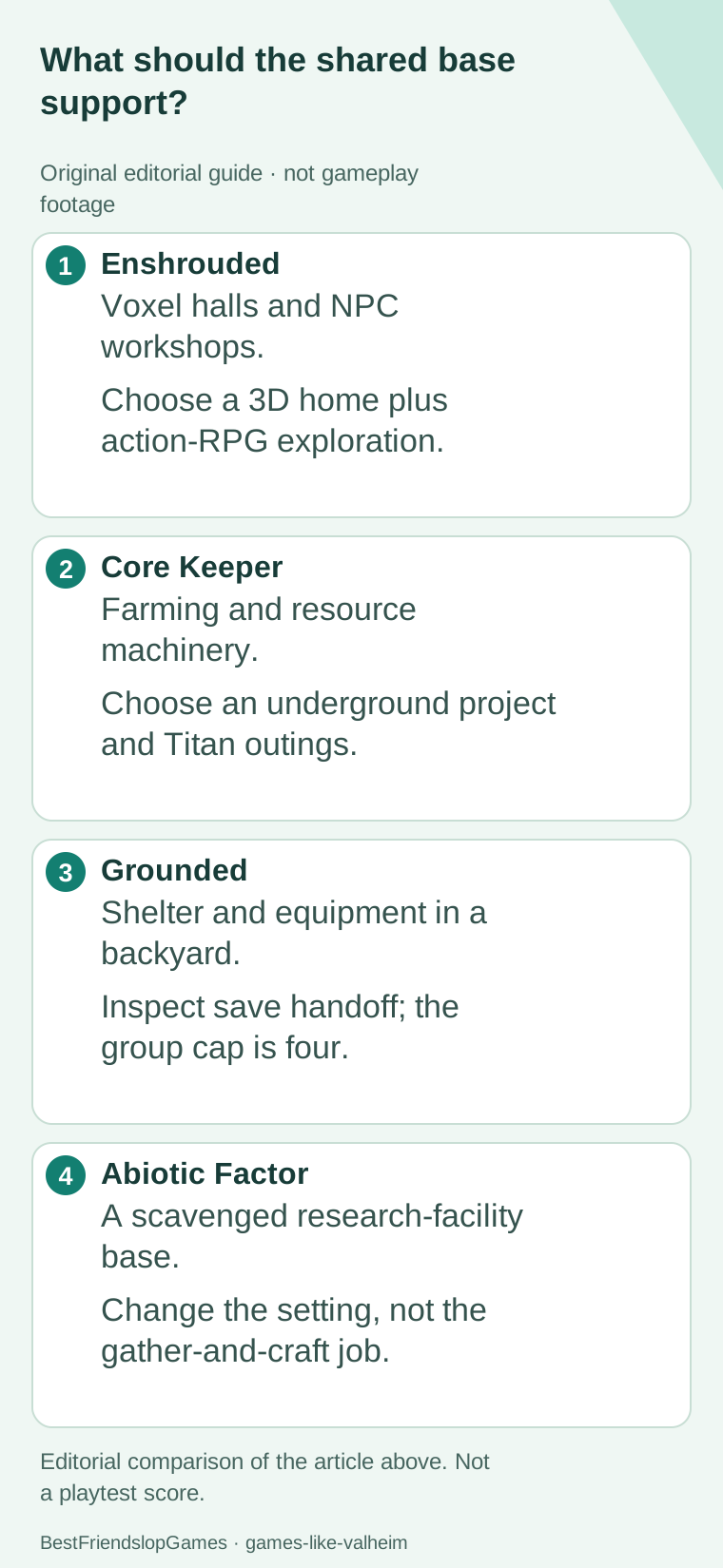
Keep the shared project, not just the survival label
Our original selection method is base → expedition → return. First, identify the project your group wants to build together. Next, identify the reason to leave it: a resource, a boss, a new route or a discovery. Finally, ask what makes returning useful to both the builder and the explorer. The point is to match the group's preferred evening, not award a similarity score to every game with a workbench.
The reference is Valheim's official description: it documents a procedurally generated world for one to ten players, bases, equipment crafting, distinct resource-bearing biomes and regional bosses that advance progression. Its food grants health and stamina benefits rather than being described as a mandatory starvation timer. A replacement can preserve building and exploration while changing that progression or survival pressure.
Our original distinction is between a group that wants a shared destination and one that wants parallel hobbies in the same world. Neither preference is wrong. If one friend wants a workshop and another wants a fight, choose a game where the documented activities give both a reason to contribute. Do not promise that a larger player cap automatically produces better cooperation, or that a survival label means everyone must spend the evening on identical chores.
Copyable comparison: seats, mode, platform and price
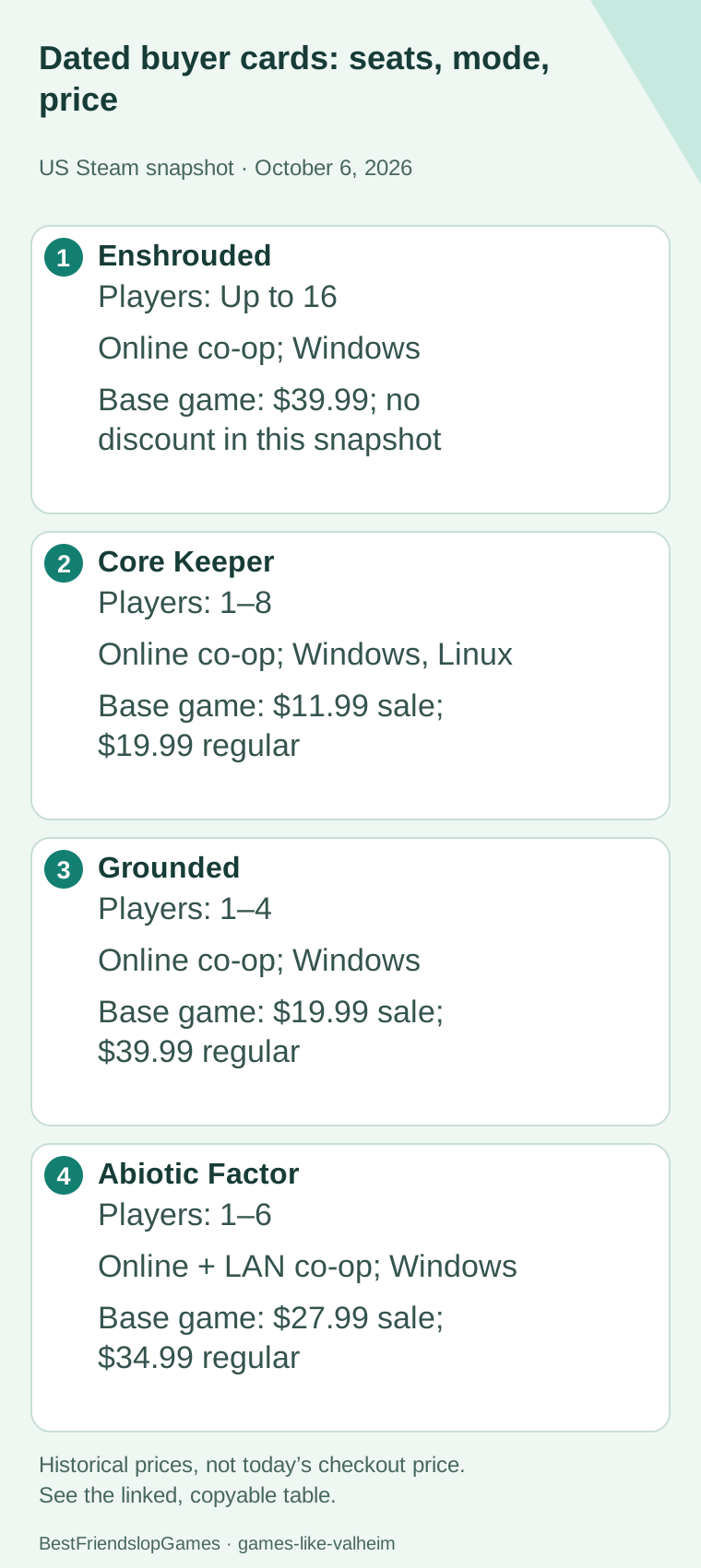
The first-column links are official stores. Prices below come from US Steam, checked October 6, 2026; they are snapshots before tax, not permanent prices. A sale can end. Platforms describe the checked Steam edition only. The group cap is the documented cooperative group, not a modded lobby or a claim about server performance at capacity.
| Official game | Documented group | Mode and Steam platform | Base project | Reason to leave it | US base-game price checked October 6, 2026 |
|---|---|---|---|---|---|
| Valheim — reference | 1–10 | Online co-op; Windows, macOS, Linux | Build halls, prepare food and equipment | Explore resource biomes and defeat progression bosses | $26.99 sale; $29.99 regular |
| Enshrouded | Up to 16 | Online co-op; Windows | Voxel buildings and NPC workshops | Explore Embervale, fight bosses and obtain crafting gear | $39.99; no discount in this snapshot |
| Core Keeper | 1–8 | Online co-op; Windows, Linux | Underground base, farming and resource machinery | Mine new biomes and face Titans | $11.99 sale; $19.99 regular |
| Grounded | 1–4 | Online co-op; Windows | Shelter and equipment in a backyard | Explore and survive giant-insect territory | $19.99 sale; $39.99 regular |
| Abiotic Factor | 1–6 | Online + LAN co-op; Windows | A scavenged base inside a research facility | Explore the complex and craft against abnormal threats | $27.99 sale; $34.99 regular |
For six friends buying six separate Steam copies, the checked base-game subtotal is Enshrouded $239.94 (6 × $39.99), Core Keeper $71.94 (6 × $11.99), or Abiotic Factor $167.94 (6 × $27.99). Grounded is excluded because its documented cap is four. These calculations exclude tax, add-ons and any paid hosting; they are not checkout quotes or a requirement to rent a server.
Enshrouded: keep grand building and a reason to venture out
Official facts: Enshrouded advertises up to sixteen co-op players, voxel construction, NPCs who unlock workshops, equipment crafting and combat styles including magic and ranged weapons. Its named realm, Embervale, has multiple biomes, bosses and a story to discover. The linked Steam listing describes action-RPG exploration alongside survival and building; it does not establish that its world-generation rules match Valheim's.
Our inference: Enshrouded is the first option here for a Valheim crew that wants another three-dimensional home to improve while adventurers collect the means to improve it. The workshop and combat descriptions support that recommendation. The tradeoff is that you are accepting this game's own character-development and exploration structure, not buying Valheim with different walls. It is also the only checked candidate that can accommodate all ten friends without splitting the group or assuming an unofficial capacity change.
Our proposed session plan: let the builder name one desired improvement and let the explorers name one useful destination before leaving. Agree on a return point rather than treating every detour as a new group objective. At the end, discuss whether the outing actually helped the shared project. This is an optional group routine, not a claim about automatic quest sharing, resource rewards or the best combat build. Check the current invitation and world settings before starting a long-running save.
Core Keeper: keep resource expeditions, move underground
Official facts: Core Keeper supports one to eight players, with drop-in/drop-out online co-op. Its developer lists mining, farming, cooking, building, equipment improvement, automated resource machinery and fights against Titans. It also explicitly supports hosting a dedicated server. These are concrete shared-world activities, not evidence that every progression step or death penalty works like Valheim's.
Our inference: pick Core Keeper if your group's strongest link is the cycle of collecting something outside the base and putting it to work inside. Its described domestic and expedition activities support both a home-focused friend and a fight-focused friend. But an underground mining world is a deliberate change of setting and presentation; do not recommend it to someone whose non-negotiable pleasure is constructing a three-dimensional Viking skyline. Eight seats also means a ten-person Valheim group must choose another option here.
Our proposed session plan: keep a short shared list with a base project, the resources it needs and the next expedition the group wants to attempt. Rotate who chooses the project instead of assigning the same friend permanent gathering duty. This is original coordination advice, not a tested optimal progression path. The documented drop-in feature makes flexible attendance worth considering, but it does not by itself guarantee that a late-arriving player will be equally equipped or experience every milestone.
Grounded: keep a shared survival home, with a four-seat limit
Official facts: Grounded's developer page describes online play with up to three friends, base construction and equipment crafting in a backyard of giant insects. It also documents Shared Worlds, allowing friends to continue the same world when its original host is absent. This is the original Grounded, not Grounded 2.
Obsidian's Shared Worlds documentation explains that an authorized friend hosts the shared cloud save; only one person hosts it at a time. That is not an always-running dedicated server. Its Steam-native multiplayer update states that ordinary Steam multiplayer does not require a Microsoft account, while Shared Worlds and cross-play do. Treat those as different access arrangements.
Our inference: Grounded merits a look when a small group wants its world to outlast the attendance of one regular host. The documented save-sharing feature solves that particular access problem; it does not solve differences in how fast friends want to advance. The biggest decision comes before mechanics: five or more friends cannot all fit the documented four-person group. A good save feature cannot make that seat limit disappear.
Our proposed session plan: agree which milestones wait for the full crew and which maintenance tasks are fair game when someone is absent. Put the agreement somewhere the group can revisit and appoint a next host before the current host leaves. Those are social rules, not restrictions enforced by Shared Worlds. They let a builder keep contributing without silently converting a shared adventure into another friend's completed story. Test access with the intended accounts before committing the evening.
Abiotic Factor: keep scavenging and crafting, change the workplace
Official facts: Abiotic Factor documents a survival-crafting experience for one to six players in an underground research complex. Players select scientific specialties, scavenge offices and labs, create equipment and traps, and establish a base while exploring the facility and other realms. Its Steam feature list labels online and LAN co-op. The paranormal enemies and hostile forces are part of its official premise.
Our inference: this is the adjacent pick for friends who want another shared survival project but would rather leave forests and medieval equipment behind. It preserves a documented gather–craft–explore job while changing the fiction to workplace science under threat. Choose it for that shift, not as a promise of Valheim's terrain generation, sailing, architectural system or exact boss ladder. The setting is also a reason to discuss horror tolerance; this article does not certify it as a non-horror replacement.
Our proposed session plan: have each friend explain what kind of contribution they want to make before selecting a specialty, then agree on the next base need and destination. Reserve room for someone to change interests rather than treating the choice as a permanent group hierarchy. This is an original planning suggestion, not a required class composition or a hands-on balance claim. For seven or more friends, eliminate this option before comparing its sale price.
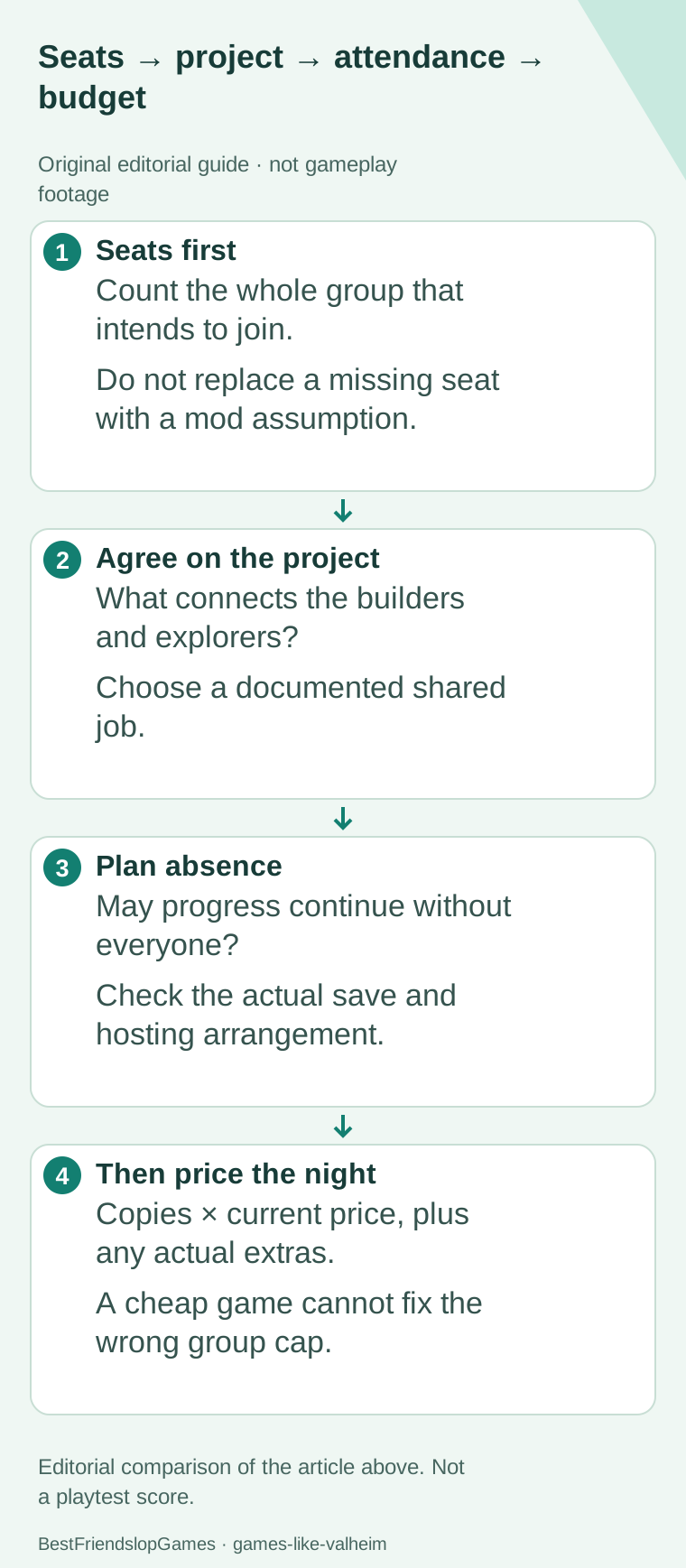
A one-minute group decision
Our original decision order is seats → shared project → attendance → budget. Count the people who intend to play together, not just the people online tonight. Then choose the activity your builders and explorers want to connect. Next, decide whether progress may continue without everyone and verify the chosen game's actual save and hosting arrangement. Finally, compare the appropriate number of copies at the current store price. This keeps a cheap or attractive recommendation from failing a basic group requirement.
- "All ten of us want another world." Enshrouded is the only documented fit among these four. Its sixteen-player cap is an access fact, not a performance benchmark or a guarantee of balanced ten-player combat.
- "Some of us build; some of us explore." Compare the NPC-workshop direction of Enshrouded with Core Keeper's farming and resource machinery. Choose the shared project both halves actually want, not whichever title has the longest feature list.
- "Our usual host often misses a night." For a group of four or fewer, inspect Grounded's Shared Worlds setup. Otherwise verify a suitable hosting arrangement for the chosen game rather than assuming every cloud save lets a different friend host.
- "We want the loop, not another Viking setting." Compare Core Keeper's underground activities with Abiotic Factor's facility scavenging. The changed environment is the reason to consider them, not something to gloss over as an identical substitute.
Quick answers
Which checked game fits a ten-person Valheim group?
Enshrouded advertises up to sixteen co-op players. Core Keeper caps the documented group at eight, Abiotic Factor at six and Grounded at four. Mods, unofficial workarounds and measured server performance are outside this check.
Can we play these on one couch with split-screen?
None of the checked Steam feature lists identifies shared/split-screen co-op. This guide verifies online play, not a local multiplayer setup. Do not buy multiple controllers on the assumption that a co-op label means split-screen.
Is Grounded's Shared World a dedicated server?
No. Obsidian describes a cloud save that an authorized friend can host, with one host at a time. It also documents the account requirement for Shared Worlds. Check the linked instructions rather than assuming the world runs when nobody hosts it.
Do these copy Valheim's progression and food rules?
That is not established. The official descriptions show overlapping building, gathering, exploration and crafting, but they do not verify identical food effects, death costs, quest sharing or boss gates. Recommendations here disclose which group job is being preserved, not an exact-clone claim.
Return to the [best friendslop games directory](/) for the broader group-night selection, including the [non-horror section](/#without-horror) if the science-fiction threat setting is not a fit.