Games Like Overcooked: Four Co-op Picks by How Your Team Works
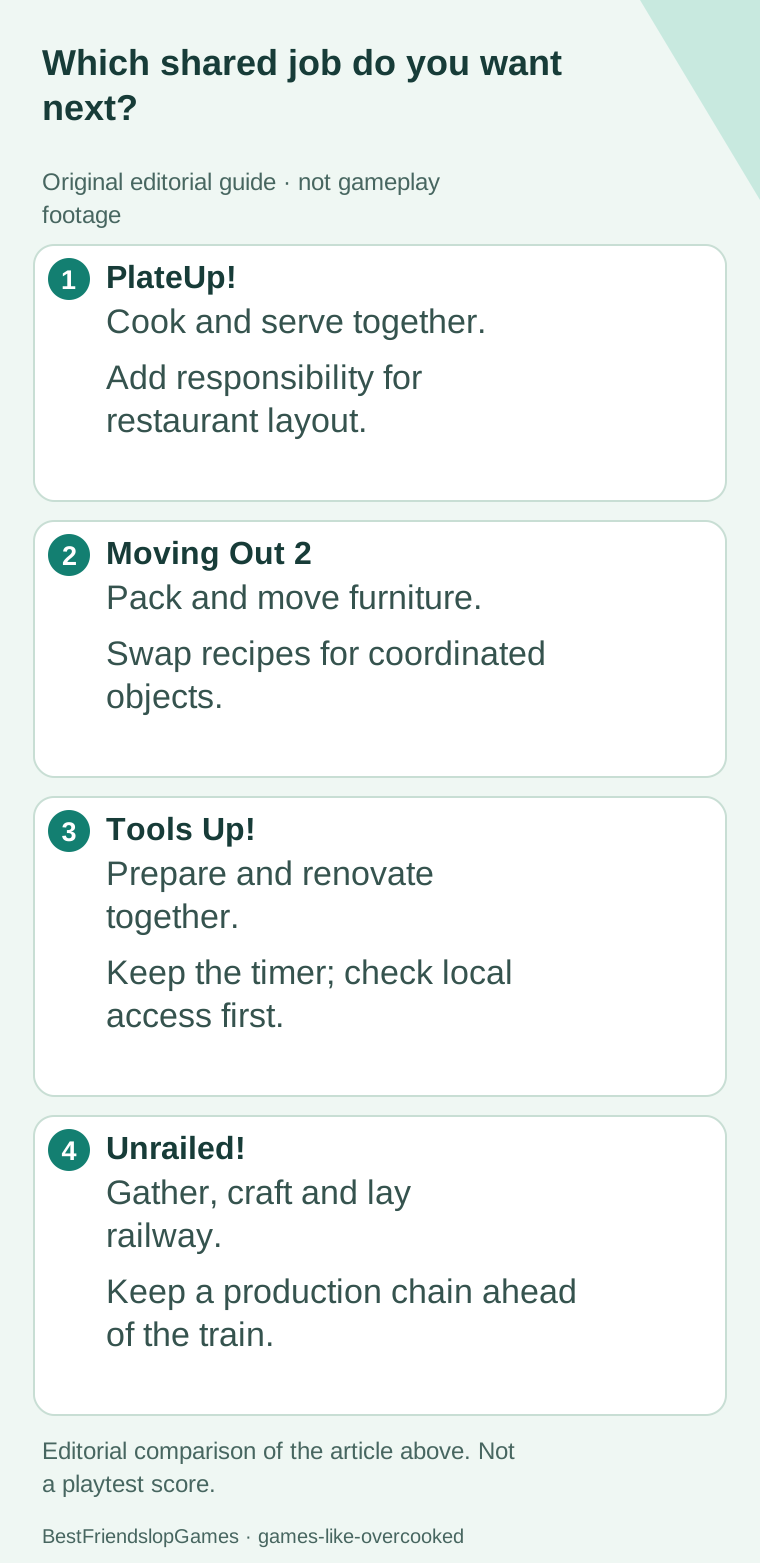
For games like Overcooked, choose PlateUp! if you want cooking plus restaurant planning, Tools Up! if you want timed, local teamwork without the kitchen, Moving Out 2 if coordinated furniture handling is the attraction, or Unrailed! if you want a production chain racing a moving deadline. All four officially support up to four players; Tools Up! is local co-op rather than native online co-op.
Official player counts, modes and US Steam prices checked October 5, 2026. Recommendations below are editorial comparisons of developer descriptions, not hands-on reviews. Our reference is Overcooked! 2: editions in the wider series do not necessarily share its online features.
Start with the handoff, not the cooking theme
Our original comparison uses handoff → pressure → recovery. A handoff is the point where one player's work becomes useful to another: an ingredient, a carried object, a prepared surface or a section of track. Pressure is what makes that exchange urgent. Recovery asks what the group must reorganize when the exchange breaks down. We use those questions to separate a similar team problem from a similar-looking setting. This is a selection method, not a numerical similarity score.
Our original buying distinction is between wanting another kitchen and wanting another interdependent job. A group that enjoys assigning stations may welcome a different setting. A group that enjoys mastering specific recipes may not. Before choosing, name the moment you miss: passing an ingredient, rescuing a delayed teammate, improving a route, or coordinating under a deadline. Then choose the alternative that preserves that moment, rather than expecting every colorful co-op game to replace the whole experience.
Copyable comparison: players, modes and budget
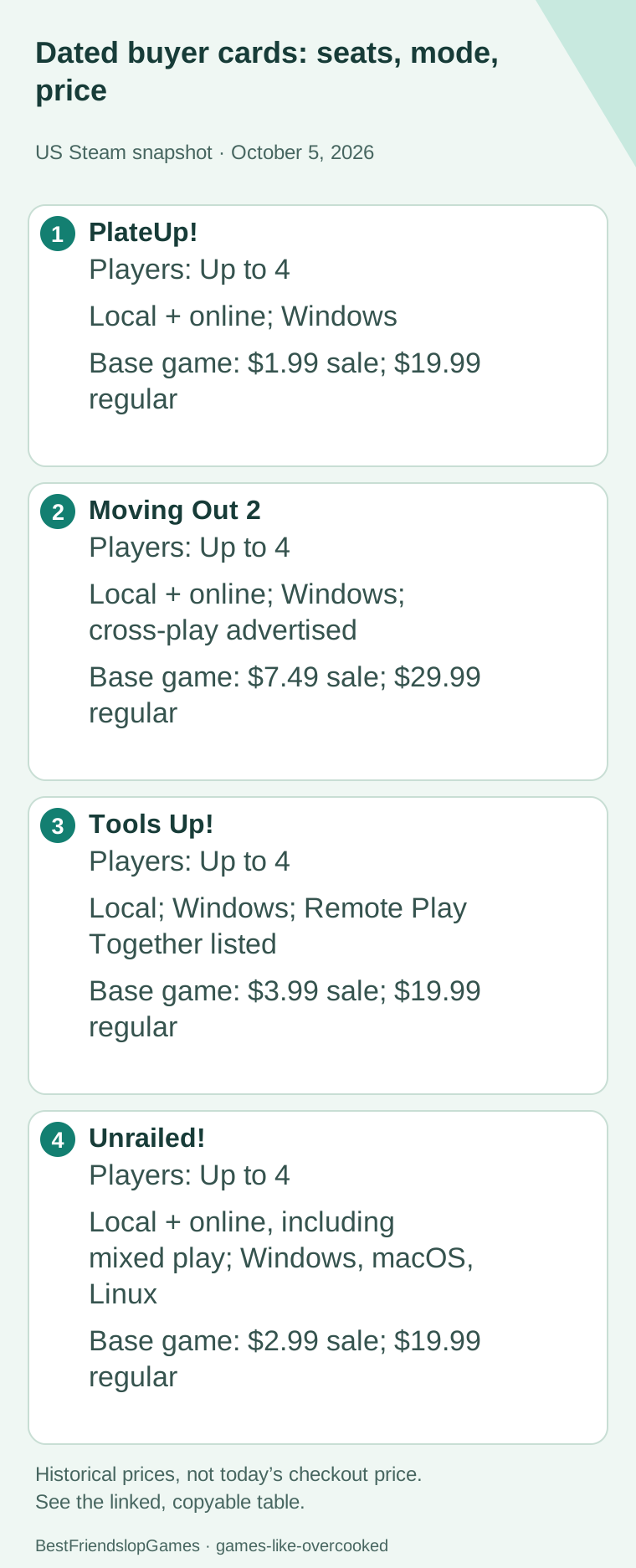
The links in the first column lead to official Steam listings. Platforms below describe the checked Steam edition, not every console release. Prices are US base-game snapshots, before tax, not permanent recommendations or advertised console prices. Sale end dates were not established by this check; recheck the store before paying.
| Official game | Co-op group | Mode and Steam platform | Shared job | Pressure in the official description | US price checked October 5, 2026 |
|---|---|---|---|---|---|
| Overcooked! 2 — reference | Up to 4 | Local + online; Windows, macOS, Linux | Prepare and serve orders together | Changing kitchens and coordinated cooking | $6.24 sale; $24.99 regular |
| PlateUp! | Up to 4 | Local + online; Windows | Cook, serve and design a restaurant | Customer patience and a progressing restaurant run | $1.99 sale; $19.99 regular |
| Moving Out 2 | Up to 4 | Local + online; Windows; cross-play advertised | Pack and move furniture | Physics-based moving challenges | $7.49 sale; $29.99 regular |
| Tools Up! | Up to 4 | Local; Windows; Remote Play Together listed | Paint, strip wallpaper and move furniture | Renovation against the clock | $3.99 sale; $19.99 regular |
| Unrailed! | Up to 4 | Local + online, including mixed play; Windows, macOS, Linux | Gather resources, craft and lay railway | Keep track ahead of a moving train | $2.99 sale; $19.99 regular |
For a four-person group buying four separate Steam copies at these sale prices, the base-game subtotal is PlateUp! $7.96, Moving Out 2 $29.96, Tools Up! $15.96, or Unrailed! $11.96. Formula: four copies × the checked per-copy price. This excludes tax and add-ons. Four copies are a remote-purchase scenario, not a requirement for four players sharing one local copy; Tools Up! does not become native online co-op by buying more copies.
PlateUp!: keep cooking, add responsibility for the layout
Official facts: PlateUp! lets up to four players run a restaurant. Cooking and serving sit alongside choosing dishes, purchasing appliances and placing equipment. Its developer describes rearrangement between shifts, procedurally generated restaurants and roguelite progression. The developer press kit also documents restaurant planning; the Steam feature list labels both local and online co-op.
Our inference: PlateUp! is the first choice here for a group that wants to keep food preparation but also enjoys discussing how the workplace should function. Overcooked! 2's described shifting kitchens ask a crew to react to the environment; PlateUp!'s documented layout choices give the crew responsibility for part of that environment. That changes the conversation from only "who is behind?" to "did we make this station hard to reach?" It is a reason to recommend the game, not a measured claim that one is harder.
Our proposed first-session approach: assign cooking, service and cleanup responsibilities, then reserve the between-shift discussion for one bottleneck the whole group agrees on. Change one arrangement before testing another shift rather than redesigning everything at once. These are suggested group rules, not official required roles. Skip this pick if your friends want a succession of self-contained kitchen challenges and dislike discussing upgrades or the consequences of a longer run.
Moving Out 2: keep the coordination, swap recipes for objects
Official facts: Moving Out 2 is a physics-based moving game for a solo player or up to three friends. The developer explicitly advertises local co-op, cross-play online multiplayer, assist mode and accessibility options. The shared objective is packing and shipping furniture through moving challenges, not preparing food orders. These claims apply to the sequel, not automatically to the first Moving Out.
Our inference: this is the better fit when your favorite Overcooked moments involve getting work across an awkward space rather than remembering the preparation sequence. Moving objects makes position and coordination the topic; a cooking game makes ingredients and stations part of that topic too. Choose this swap if the group wants less emphasis on food processing, but do not sell it as an identical order queue with sofas. The documented assist options are a reason to inspect its settings, not a promise that nobody will get frustrated.
Our proposed first-session approach: agree on a destination and a short movement call before starting a coordinated carry. Let one person propose the route while the others confirm it, then switch who calls the next attempt. This is an original communication exercise, not a mechanic that the game enforces. It helps reveal whether your friends actually enjoy synchronized positioning or merely enjoyed Overcooked's recognizable kitchen job. Check the official invitation instructions for your exact platform pair before relying on cross-play.
Tools Up!: keep the timer, trade the kitchen for renovation
Official facts: Tools Up!'s Steam description identifies local co-op, painting walls, removing wallpaper and moving couches against the clock. The listing advertises four-player split-keyboard play and Remote Play Together. It does not list native online co-op. Remote Play Together streams a local session; it should not be described as the same networking mode as PlateUp!'s or Moving Out 2's online co-op.
Our inference: choose Tools Up! when the appealing part of Overcooked is jointly finishing an urgent practical job, but another kitchen sounds repetitive. Renovation provides a different set of things to prepare, deliver and finish. The meaningful match is the need to coordinate work under a timer, not a claim that renovation has the same recipes, scoring or campaign structure. For friends in separate homes, its access mode is a decision gate rather than a footnote after the recommendation.
Our proposed first-session approach: divide the job into preparation, completion and clearing space, then ask who needs what before everyone starts moving material. Rotate responsibilities after an attempt so the group's discussion stays about workflow rather than permanently blaming one person. These are editorial suggestions, not named game classes. If your remote group specifically requires native online co-op, remove this option before comparing its price; a cheap local title does not solve that requirement.
Unrailed!: keep the production chain, make the deadline move
Official facts: Unrailed! supports up to four players working together, online or locally, and explicitly permits mixing the two. The team gathers resources and crafts railway to stop the train reaching the end of its track. The developer describes a single tool of each type, procedurally generated worlds and upgradeable wagons. This comparison concerns the original Unrailed!, not its sequel or its separate competitive mode.
Our inference: this is the clearest choice for friends who liked Overcooked's interdependence more than its restaurant setting. Resources, crafting and track placement form a linked job where unfinished upstream work can leave the next stage waiting. The train turns urgency into a visible approaching problem. That is a different pressure shape from a kitchen's orders, so it suits a crew that enjoys coordinating a continuously advancing project, not necessarily one that wants familiar levels with new recipes.
Our proposed first-session approach: identify the next task that will block the team, then move help there rather than defending fixed job titles. Ask "what will run out first?" before stockpiling another resource. This is an original way to discuss the documented construction loop, not a tested optimal strategy or a claim about the game's exact resource balance. If your group wants breaks built around discrete cooking challenges, consider whether a moving construction frontier is really the replacement you want.
A one-minute group decision
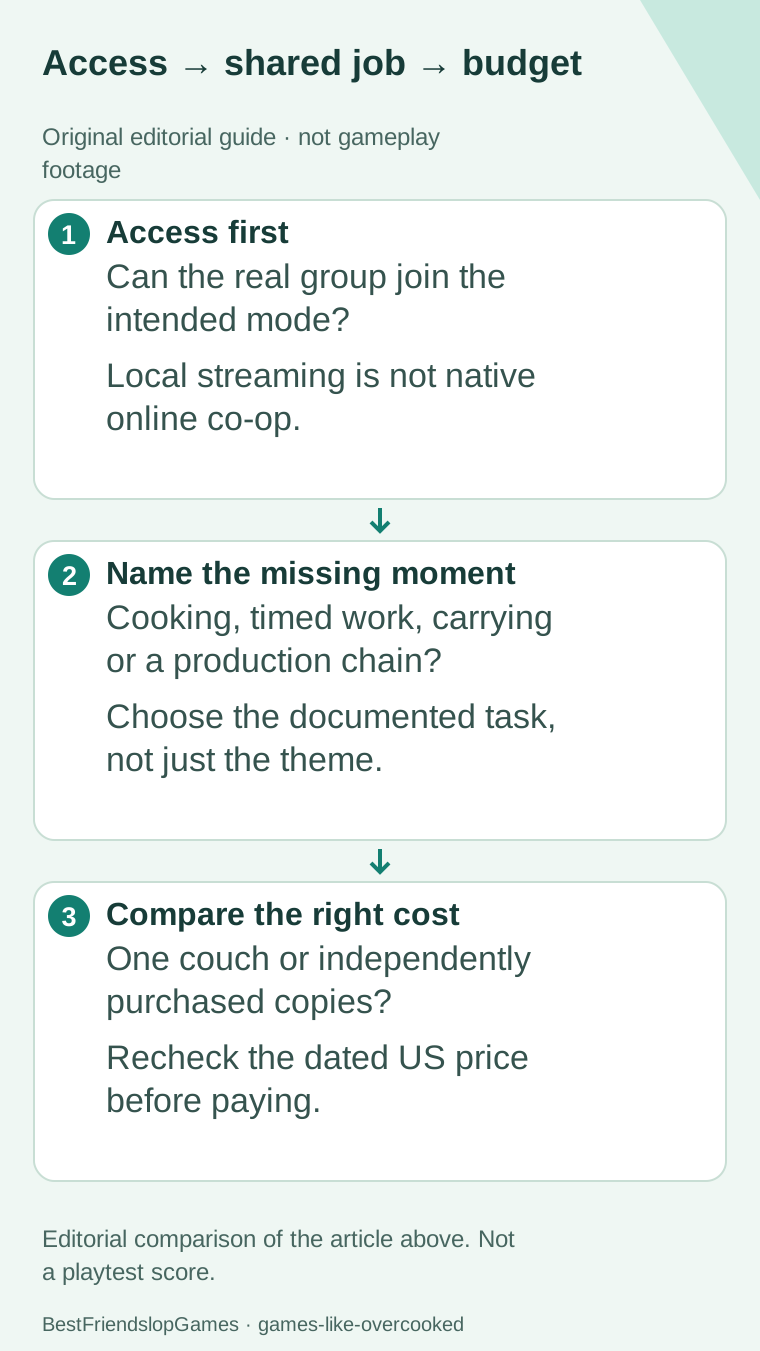
Our decision route starts with access, then the shared job, then budget. Eliminate a game that cannot connect the actual group before debating its theme. Next, decide whether the missing ingredient is cooking, a timed practical job, coordinated carrying or an advancing production chain. Only then compare the dated prices. Otherwise the cheapest choice can win a discussion while failing the reason everyone wanted an Overcooked replacement in the first place.
- "We want another cooking game." Start with PlateUp!, provided the group also wants restaurant planning and a progressing run. The food theme is the closest fit here, but its planning is a change to accept, not something to hide.
- "We want one couch and a timer." Inspect Tools Up! first. Its documented local setup and renovation job fit that request without implying that all local games also have native online lobbies.
- "We want to coordinate ridiculous carrying." Inspect Moving Out 2. Prioritize whether everyone can join the intended session, then explore its assist settings if your group wants to adjust the challenge.
- "We want our separate jobs to depend on each other." Inspect Unrailed!. Choose it for the construction chain and approaching train, not because a cartoon presentation guarantees the same pace or difficulty as Overcooked.
Quick answers
Which game is closest to Overcooked's cooking?
PlateUp! is the cooking-focused alternative in this checked set. That is our editorial recommendation, not an exact-clone claim: its official description adds restaurant design, upgrades and roguelite progression.
Which of these have native online co-op?
The checked Steam listings identify online co-op for PlateUp!, Moving Out 2 and Unrailed!. Tools Up! identifies local co-op and Remote Play Together instead. Overcooked! 2 itself lists local and online co-op; do not apply that statement to every Overcooked edition.
Can five friends play these together?
Not in the documented four-player co-op groups compared here. None is a verified five-seat solution in this article. For a larger group, consult the site's [five-player selection section](/#five-players) rather than assuming that "multiplayer" means an unlimited lobby.
What should a budget-conscious group check first?
The dated table's lowest per-copy sale price is PlateUp!'s $1.99, but the relevant cost depends on your mode and number of purchased copies. Recheck the official store for current prices, taxes, access and any desired add-ons. A local session and four independently purchased online copies are different budgets.
For the wider directory, return to [best friendslop games](/). For a two-person adventure rather than a shared work shift, compare [games like It Takes Two](/games-like-it-takes-two/).