Games Like Project Zomboid: 4 Co-op Survival Picks
For games like Project Zomboid, start with 7 Days to Die for zombie base defense, Survivalist: Invisible Strain for survivor-community management, or Abiotic Factor for shared scavenging and crafting. DYSMANTLE is the two-player local option when you want exploration without hunger death. These are different replacements, not exact copies; check your group's mode, seats and budget below.
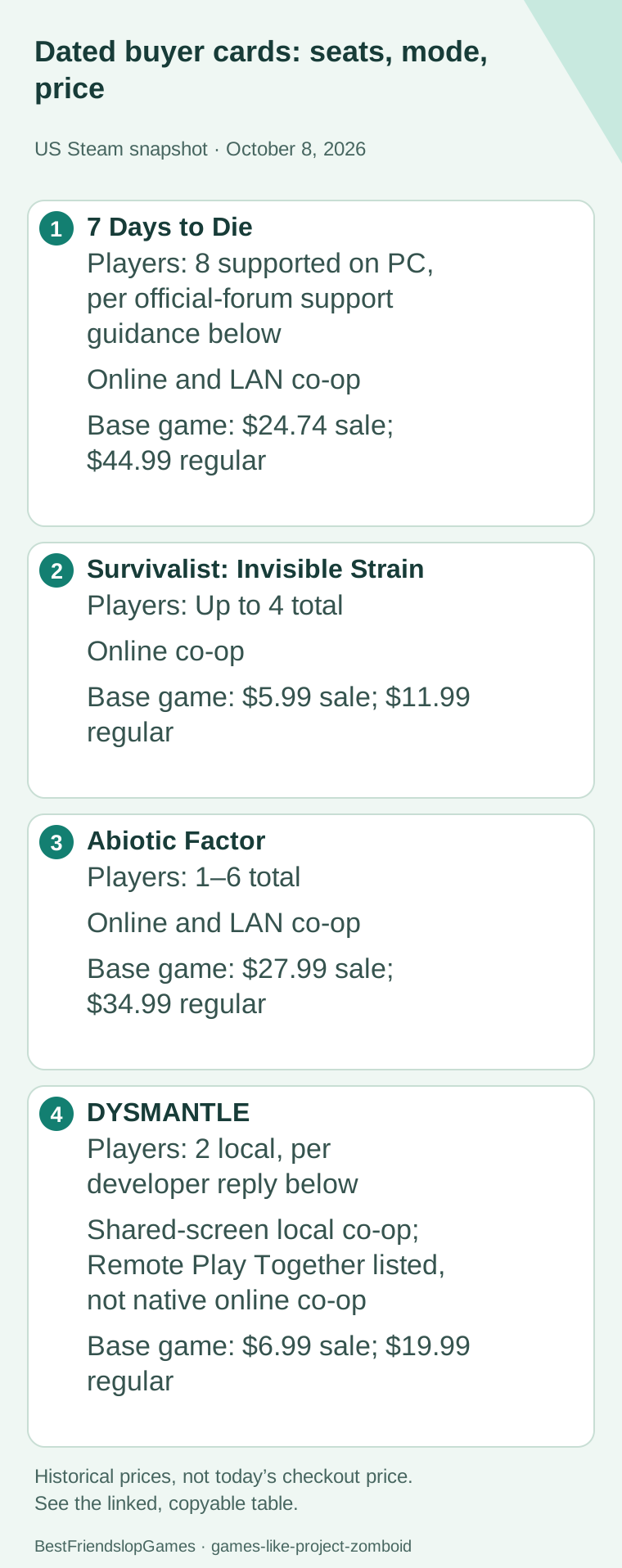
Compare players, modes and prices first
Checked October 8, 2026 against official Steam US listings and the capacity sources linked below. Prices are base-game USD snapshots before applicable tax, not promised checkout prices. This table covers the Steam editions; listed operating systems do not establish console crossplay. We checked documentation, not hands-on performance or server stability.
| Game and official source | Documented players | Co-op mode | Steam operating systems | US base-game price checked October 8, 2026 | Why it is here / main tradeoff |
|---|---|---|---|---|---|
| Project Zomboid — reference | Server-dependent online capacity; numeric cap not stated in checked listing | Online and local split-screen co-op | Windows, macOS, Linux | $16.74 sale; $24.99 regular | Detailed day-to-day survival; do not assume every alternative reproduces it |
| 7 Days to Die | 8 supported on PC, per official-forum support guidance below | Online and LAN co-op | Windows, macOS, Linux | $24.74 sale; $44.99 regular | Zombie scavenging and fortification, with first-person combat and tower defense |
| Survivalist: Invisible Strain | Up to 4 total | Online co-op | Windows | $5.99 sale; $11.99 regular | Build and manage a survivor community; action plus strategic control |
| Abiotic Factor | 1–6 total | Online and LAN co-op | Windows | $27.99 sale; $34.99 regular | Scavenge and craft in a research facility, not a zombie-town simulation |
| DYSMANTLE | 2 local, per developer reply below | Shared-screen local co-op; Remote Play Together listed, not native online co-op | Windows, macOS | $6.99 sale; $19.99 regular | Explore and build permanent upgrades without hunger death; not a larger online group pick |
Capacity cross-checks: the 7 Days to Die official-forum support FAQ records the developer's eight-player support baseline. A later official-forum moderator response repeats eight supported players. That is a support baseline, not a claim that every server is technically limited to eight. DYSMANTLE's developer capacity reply specifies two; its developer FAQ distinguishes local co-op streamed over the internet from a native online mode. Rechecked on the date above.
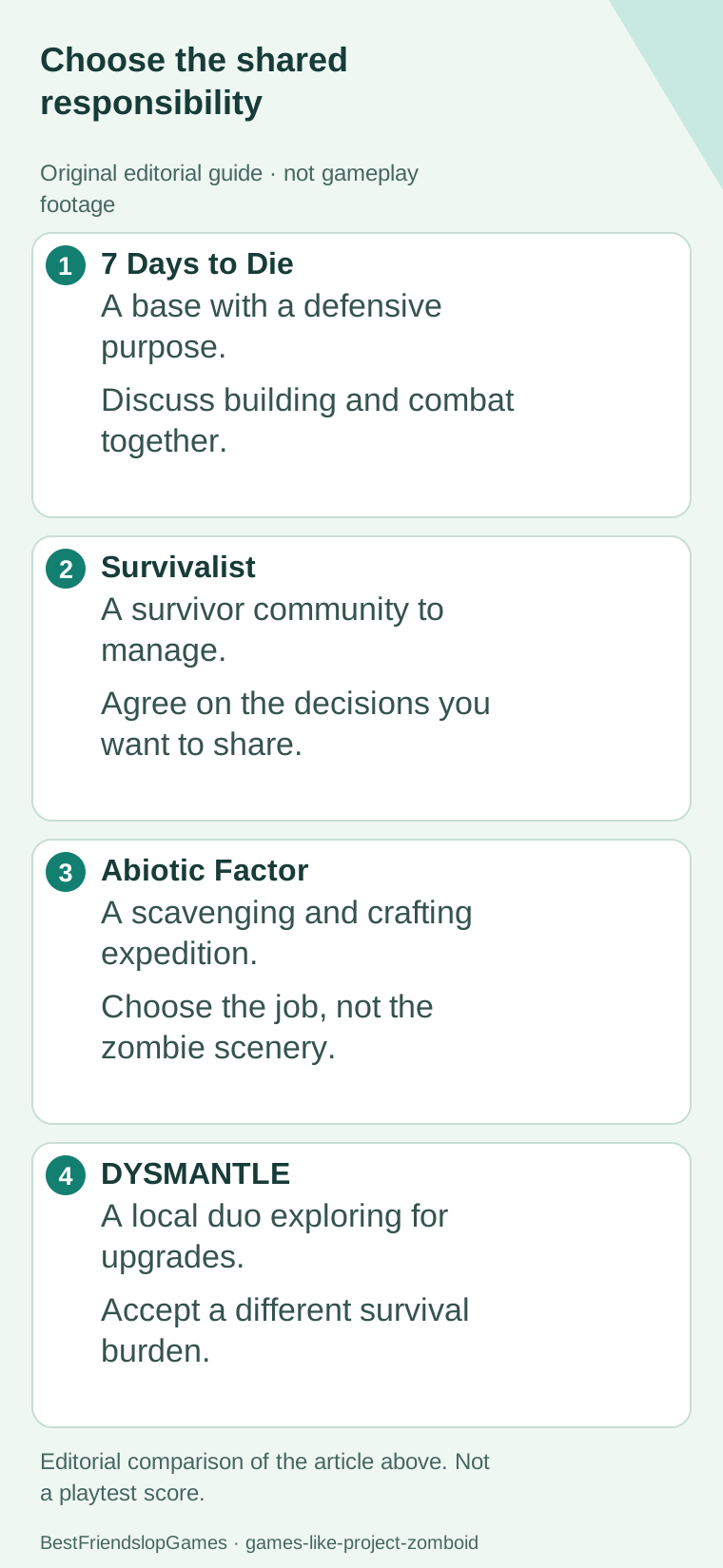
Keep the survival problem you actually enjoy
Project Zomboid's official description connects scavenging and fortification with hunger, thirst, illness, visibility, sound and an ongoing world. Matching only the zombies can miss the reason your friends kept playing. Conversely, a different setting can still preserve the satisfying group job. Our picks therefore separate the recurring responsibility from the scenery.
Our selection rule: ask everyone to finish this sentence before naming a replacement: “I want to be responsible for ___ while the others ___.” A builder might want the expedition to bring back supplies; a scavenger might want a meaningful reason to leave shelter; someone else may want the responsibility of keeping a community functioning. Treat those answers as different requests, even when everyone says “survival.” Next ask what the group wants to stop doing. Removing a disliked burden is a valid reason to choose an adjacent game, but it is not evidence that the game is the closest simulation. This two-column wish list prevents one enthusiastic shopper from choosing for the entire crew. Use the documented tasks below to shortlist candidates, then eliminate modes that cannot fit the people actually joining.
7 Days to Die: make the base a defensive project
Verified facts: the developer's Steam description combines scavenging, crafting and character development with first-person combat and tower defense. It describes destructible construction, traps and defenses, and cooperative settlement building. The table's mode and OS fields come from the current Steam listing; the capacity qualification comes from the separately linked support sources.
Our fit judgment: this is the first candidate we would discuss when the group remembers its Zomboid base as a joint engineering project. The connection is not simply “both have zombies”; it is that outings can serve a home whose defenses matter. The useful tradeoff to discuss is whether your builders also want the combat-facing side of that project. If one person wants to decorate in peace while another wants every resource turned into defenses, buying the same game will not resolve the disagreement. Agree on the purpose of the base first. For a group that mainly values Zomboid's granular character simulation, this recommendation is weaker: the documented shared project supports a comparison, not a promise of equivalent medical, stealth or character-loss systems.
Survivalist: Invisible Strain: make people the shared project
Verified facts: the official listing describes recruitable survivors with relationships and memories, assignable community jobs, settlement construction, and a mix of direct third-person action and strategic orders. It explicitly supports up to four players in online co-op across the listed game modes.
Our fit judgment: put this on the shortlist when “we built a home” really means “we want a community to look after.” Its management focus gives your group a different subject for discussion than collecting another pile of materials. Before choosing it, ask whether everyone wants a say in community decisions or whether someone would rather only explore and fight. Our proposed arrangement is to agree on major recruitment and settlement choices together, while leaving routine jobs to whoever enjoys them; that is a group agreement, not an in-game permission feature. Do not sell a reluctant friend on a supposed exact Zomboid replacement. Here the attraction is responsibility for other survivors, and the action/strategy mixture is part of the change you are deliberately buying.
Abiotic Factor: keep scavenging together, change the setting
Verified facts: the developer describes one to six players surviving in a research facility, scavenging supplies, crafting equipment and establishing a base. Its setting includes paranormal and military threats. The current Steam features list both online and LAN co-op.
Our fit judgment: this is our adjacent pick for a crew that wants the expedition conversation more than the zombie fiction. Think about the moment when someone proposes going farther and someone else wants to return with the haul. A shared scavenging-and-crafting task gives that discussion a plausible home even when the world looks completely different. We would not recommend it on the basis of camera similarity, identical lethality or matching simulation depth; those are not established by these sources. Give it priority if your group is willing to trade the familiar setting for a new shared workplace. Give it less priority if the indispensable feature is inhabiting an ordinary zombie-stricken town rather than cooperating over supplies and equipment.
DYSMANTLE: choose a local duo and a different kind of progress
Verified facts: Steam describes reclaiming a handcrafted island, collecting materials and unlocking permanent upgrades, and explicitly says the character will not die of hunger. The developer confirms a two-person local co-op limit. This is a deliberate change from the survival burden in the reference game, not a claim of matching difficulty.
Our fit judgment: use this option only after the mode check. An inexpensive game is not a bargain for friends who cannot join the intended session. For a pair that can use local play, the decision is whether a growing collection of permanent improvements sounds more appealing than sustaining the daily needs of a survivor. That makes it a useful answer to “we like searching the map together, but want a different pressure,” and a poor answer to “we want the same harsh simulation with more friends.” Do not let the superficially familiar elevated view make the decision for you. Start with the desired routine and accept the tradeoff openly; a smaller, more focused shortlist is more helpful than pretending every recommendation serves every group.
Budget the session, not an abstract player cap
For separately purchased Steam copies, group software cost = copies needed × the dated per-copy price. At the checked sale prices, four new copies cost $98.96 for 7 Days to Die (4 × $24.74), $23.96 for Survivalist (4 × $5.99), or $111.96 for Abiotic Factor (4 × $27.99). Four is an example headcount, not a required party size. Taxes, optional DLC, hardware and any separately chosen hosting are excluded; hosting cost is not estimated here. A two-person DYSMANTLE session on one local machine uses one copy: 1 × $6.99 = $6.99, not four purchases for a nonexistent four-player mode. Check input-device requirements and current pricing before paying.
Our budget rule: decide what the budget must accomplish before ranking by price. Write down the actual people, devices and intended session type, then count only the copies that arrangement needs. A friend who already owns the game changes the purchase total but does not change its supported mode. If the cheapest eligible choice misses the group's essential task, keep it as a different-night option rather than calling it the winner. Likewise, do not justify an unsuitable lobby by assuming a mod will add seats. Mods or a different hosting arrangement require their own check and agreement; this shortlist does not include them as invisible fixes. The goal is a workable invitation, not the lowest number in a table.
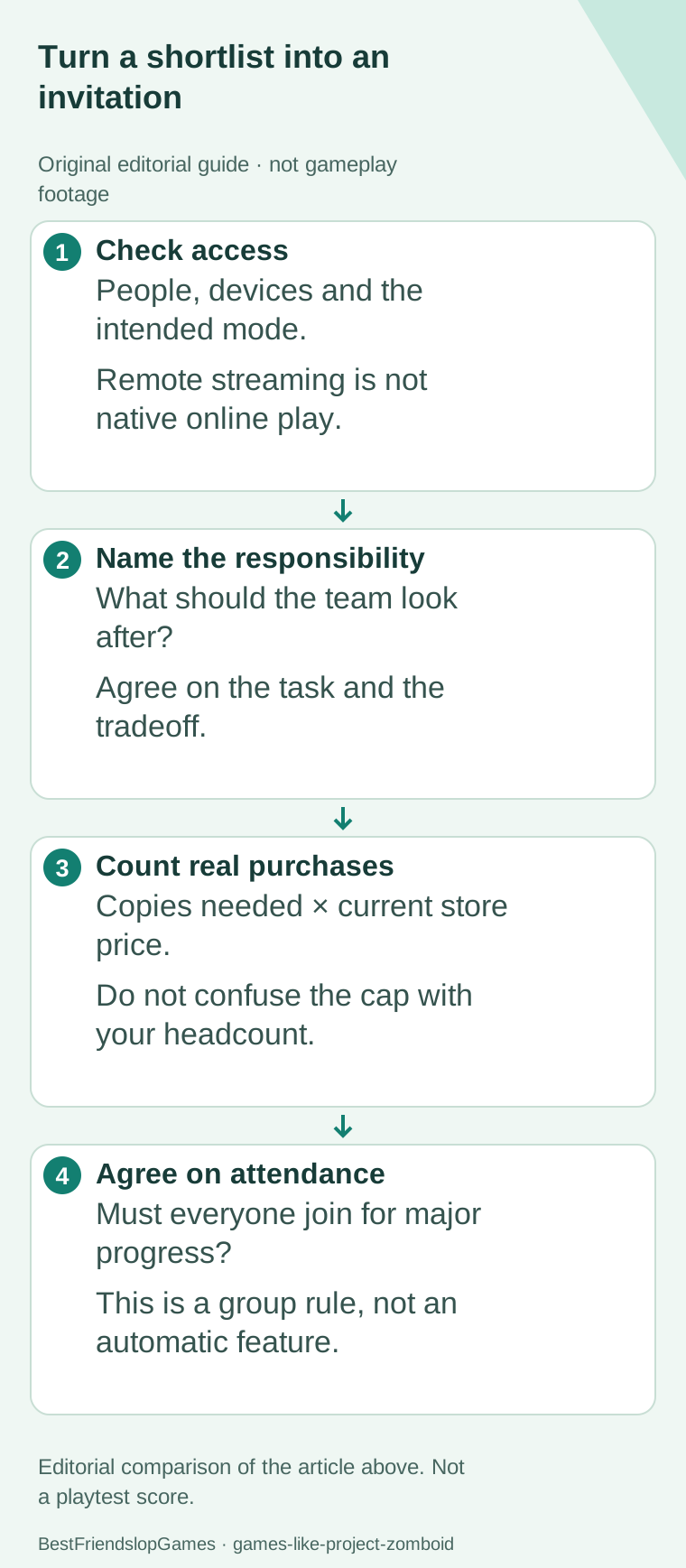
A one-minute decision for your next survival night
Our group plan: take turns naming one moment you want to repeat and one burden you want to remove. First filter by who can join, then choose the shared responsibility: defend a base, manage survivors, scavenge a facility, or explore as a local pair. Only after that compare the eligible purchase totals. Write the choice as a short promise to the group: “We are trying this for the shared task, and we accept this difference.” That sentence makes the tradeoff visible to the person who did not research the games. Before a long-term world begins, also agree whether everyone needs to attend for major progress. This is a scheduling suggestion, not a claim that any listed game automatically pauses or protects absent players.
Quick answers before the group buys
Which is the closest choice for a zombie base-building group?
Our editorial starting point is 7 Days to Die for a team that wants scavenging to feed a defensive base project. Survivalist is the alternative when survivor-community management matters more. Neither is presented as an exact replacement for Project Zomboid's simulation.
Which checked options fit four online friends?
Survivalist explicitly supports four total and Abiotic Factor supports up to six. The linked 7 Days to Die support baseline is eight on PC; check the intended host configuration. DYSMANTLE's two-person local mode does not fit four online friends.
Is DYSMANTLE a native online co-op game?
No. Its developer FAQ describes local shared-screen co-op; Steam Remote Play Together can stream a local session, but that is not a separate native online mode. Confirm the setup before buying for a remote pair.
Does similar mean easier, or the same death penalty?
No. This comparison establishes tasks and access, not a universal difficulty score or identical death rules. DYSMANTLE explicitly removes hunger death; that one verified distinction should not be stretched into a claim that every part is easy.
Sources and scope
Official Steam listings linked in the table supplied the US price, OS, mode and gameplay snapshots checked October 8, 2026. Capacity exceptions are linked immediately below the table. Store prices and multiplayer details can change. Recommendations, the responsibility filter and group agreements are our editorial synthesis; no playtest, performance benchmark or unique access to developer information is claimed. For the broader game-night directory, return to BestFriendslopGames; if the shared base matters more than zombies, also compare games like Valheim.