Games Like Gang Beasts: Brawls, Couch Play and Co-op
The best starting points for games like Gang Beasts are Party Animals for another physics-driven brawler, Rubber Bandits for fighting over loot, and Stick Fight: The Game for a 2–4-player weapon-based fight. Choose Human Fall Flat instead if you want clumsy physical cooperation without making elimination the goal. Before buying, check the exact mode: a four-person online party, four local players and an eight-player match are different promises.
Official sources checked October 11, 2026. This is a source-based comparison and editorial selection guide, not a hands-on playtest. Prices below are US Steam base-game snapshots; features concern those PC versions unless a console is explicitly named. A cute character or a multiplayer tag does not establish the right setup for your friends.
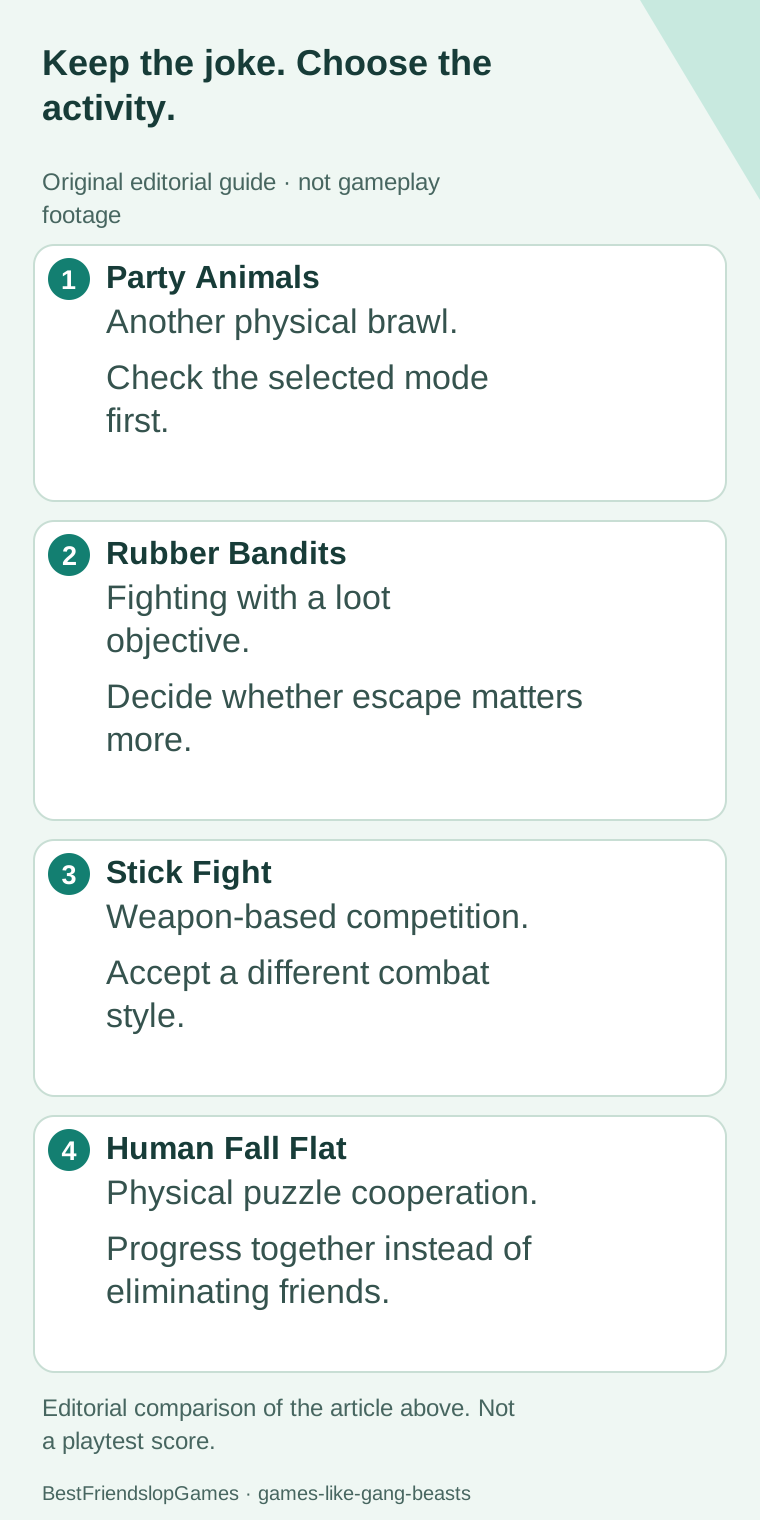
Keep the joke, choose the shared activity
Gang Beasts' current official listing describes slapstick fighting in hazardous environments, with local and online enemies in melee and cooperative fighting against gangs. That is a more useful starting point than treating every game with unsteady characters as the same experience.
Our selection rule: Ask what your group wants to do to one another. If the memorable moment is an attempt to shove a friend out of danger that instead sends them flying, another brawler is a sensible direction. If the funniest part is everyone failing to move an object together, cooperation may preserve the joke better than another elimination match. These are not different quality levels; they are different social contracts. Decide whether victory should come at a friend's expense, from a shared task, or from a score that lets fighting remain only one tool. Then check the seating arrangement. A close mechanical match that leaves somebody unable to join is a worse recommendation for that evening than a modest change of activity.
Player counts, modes and budget at a glance
All prices were checked on October 11, 2026, in USD, using the US Steam store. Sales can end; taxes, controllers, console subscriptions and paid extras are excluded. The table deliberately distinguishes a premade party from total match capacity. It does not promise that local and online modes can be combined unless the linked documentation says so.
| Game | Local play on the checked PC version | Online group information | PC platforms on Steam | US base-game price | The important change |
|---|---|---|---|---|---|
| Party Animals | Up to 4 in documented Classic / Last Stand / Team Score split-screen; other modes differ | Quick Match premade party up to 4 total; this is not a universal match or custom-lobby cap | Windows | $19.99 | Keep physical competition; choose the supported mode before counting seats |
| Rubber Bandits | Local co-op/PvP; game advertised for 1–4 players | Online co-op/PvP within its advertised 1–4-player scope | Windows | $9.99 | Add loot and escape goals to the fighting |
| Stick Fight: The Game | 2–4 local players | 2–4 online players; no single-player mode | Windows, macOS | $1.99 sale; $4.99 regular | Switch to weapon-focused stick-figure combat |
| Human Fall Flat | Split-screen co-op listed; publisher's PC announcement documents 2 local players | Up to 8 online players; solo play also available | Windows, macOS | $19.99 | Replace winning a brawl with solving physical obstacles together |
Table sources: Party Animals Steam, official split-screen support, official Quick Match FAQ, Rubber Bandits, Stick Fight, Human Fall Flat, and the publisher's August 22, 2019 PC announcement. The last source supplies historical local-player documentation; the current Steam listing independently confirms split-screen support and eight-player online play.
Party Animals: closest starting point for another physical brawl
What stays: The official Steam listing presents fighting friends or teaming up against others and lists local split-screen and online competitive modes. What needs care: The support page distinguishes modes rather than promising four local players everywhere. Classic Quick Match, Last Stand and Team Score support up to four local players on supported setups; SMASH and Nemo Kart allow two. Console Local Mode is a separate restriction, not the same as PC split-screen. Official mode breakdown.
The Quick Match FAQ documents a premade group of four including the inviter. The Custom Game FAQ describes private-lobby controls, teams and adding local or AI players. We do not turn the premade-party figure into an all-modes maximum.
Our fit judgment: Put Party Animals first when your group wants to keep the competitive physical interaction and is willing to choose a mode around the actual setup. The relevant question is not just whether everyone owns a controller, but whether the selected activity accepts that arrangement. Agree on a supported mode before inviting the fourth couch player; switching to a different mode later can change the answer. For remote friends, distinguish joining as a premade team from filling an entire private match. This recommendation is strongest when the group enjoys experimenting with a new brawler, and weaker when the requirement is an identical camera, identical controls or an entirely interchangeable couch session. Those similarities need evidence beyond the characters' appearance.
Rubber Bandits: give the fight a loot objective
What stays: Physics-based combat, dangerous traps, weapons and destructible environments are documented in the official description. What changes: Its heist framing asks players to collect cash and escape; the listing also names separate brawl and team modes. It advertises 1–4 players, local and online play, at $9.99 in the checked US store. Official source.
Our fit judgment: Choose this when your friends enjoy interference but want a reason to move beyond hitting whoever is nearest. A loot objective changes the argument: do you chase a rival, protect what you collected or head for the exit? That gives the group a different way to judge a successful round without requiring everyone to stop fighting. It is not a promise that a player can ignore combat, and it does not make every listed mode a cooperative heist. Pick the activity together rather than buying on the theme alone. We would favor it for a small group that likes rivalry with an extra objective, not for somebody who specifically wants to reproduce Gang Beasts' grabbing exchanges or accommodate more than four participants.
Stick Fight: simplify the presentation, change the combat
What stays: The official description calls this a physics-based fighting game for friends, with interactive levels and weapons. What changes: Its stick-figure combat is not another gelatinous-character wrestling game. The developer explicitly lists 2–4 players locally or online and no single-player mode. The checked US price is $1.99 on sale, down from $4.99. Official source.
Our fit judgment: This is the option for a group that wants the next confrontation to matter more than preserving the exact physical feel. If your Gang Beasts sessions are mainly an excuse to compete with friends and react to unpredictable situations, a new combat vocabulary may be welcome. If holding, hauling and struggling with another character is the whole attraction, weapons and stick figures are a substantive change, not a cheaper equivalent. Ask which side of that distinction everyone is on before letting the low sale price settle the decision. Also check the minimum attendance: planning to practice alone while waiting for friends conflicts with the documented lack of a single-player mode. Buy for the gathering you can actually arrange, not a hypothetical full room.
Human Fall Flat: keep the physical comedy, stop eliminating friends
What stays: The official description centers on physics-based movement, objects and environments. What changes: Players navigate dreamlike levels and solve obstacles together rather than choose a winner through a brawl. Steam documents up to eight online players, solo play and split-screen co-op; the publisher's older PC announcement specifies two local players. The checked base-game price is $19.99. Current store and dated local-mode documentation.
Our fit judgment: Choose this when the group likes losing control of a situation but dislikes making one friend the repeated loser. A shared obstacle lets the person causing the mishap remain part of the next attempt instead of making rivalry the purpose of the evening. That does not guarantee harmony: a player who only wants to sabotage the others can still frustrate friends who want to finish a puzzle. Agree whether progress or playful disruption comes first. It is a useful change for a group seeking physical cooperation, but a poor substitute for friends expecting a sequence of competitive victories. The larger online capacity solves a seating problem only if everyone accepts the shift from defeating each other to moving forward together.
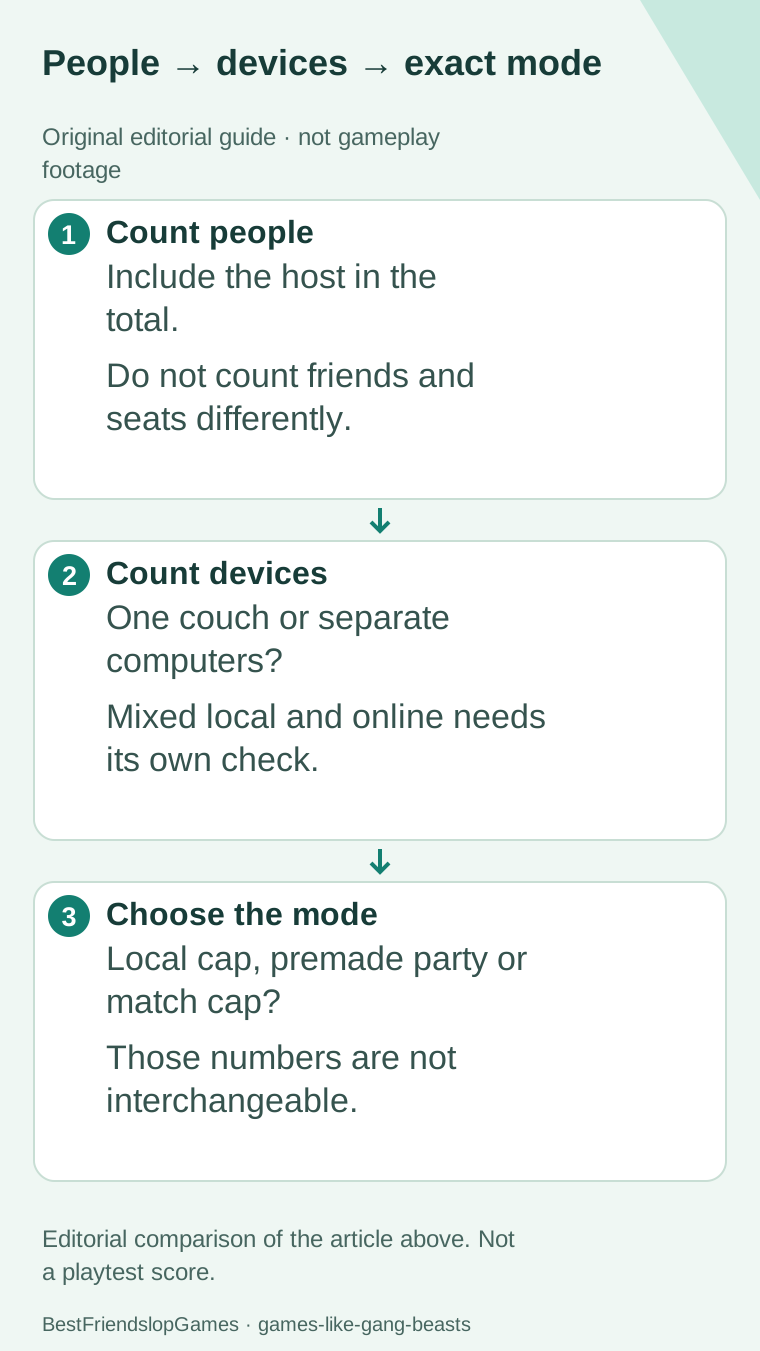
A mode-first decision for your group
Our access rule: Write down people, devices and intended activity as three separate entries. Four people sharing one computer is not the same purchase plan as four people on separate computers, even if the same game can serve both. Next, assign the exact mode rather than only the title. If a source gives a premade-team size, leave the match-capacity field separate; if it gives a console limit, do not transfer it to PC. For a mixed couch-and-remote group, confirm that combination explicitly before checkout. This method prevents the most frustrating kind of recommendation: a game that sounds right until everyone is assembled and discovers that the advertised number describes a different way of playing.
For five or more remote friends, Rubber Bandits and Stick Fight do not fit the documented four-player scope used here. Human Fall Flat's eight-player online mode is the clearly documented larger-group option in this comparison, if cooperative puzzles suit the group. Party Animals needs a separate custom-lobby check; its four-person Quick Match party figure does not answer that larger-group question.
Our session rule: Decide in advance what a disappointing first round would tell you. Losing because a new control scheme is unfamiliar may be an acceptable learning step; discovering that everyone wanted a cooperative goal is a selection error. Give the group permission to change the activity without treating it as somebody's failure to play well. In a competitive game, agree whether repeated victories or amusing incidents matter more. In a cooperative game, agree how much deliberate disruption is welcome. These agreements do not manufacture fun, but they expose a mismatch that a feature list cannot resolve. The best follow-up to Gang Beasts is the one that supports your friends' preferred interaction, not necessarily the one with the closest silhouette.
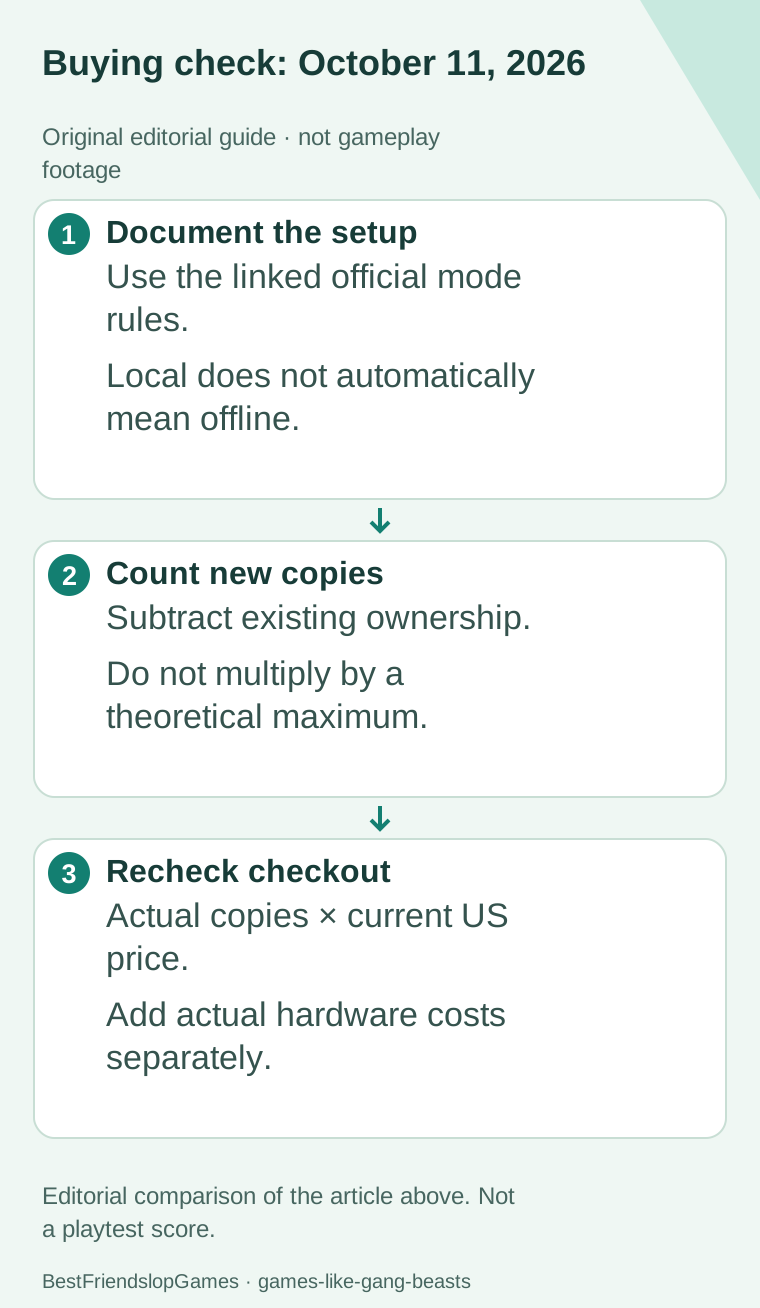
Budget the actual setup
For four people each buying a Steam copy at the checked prices: Party Animals: 4 × $19.99 = $79.96; Rubber Bandits: 4 × $9.99 = $39.96; Stick Fight: 4 × $1.99 = $7.96; Human Fall Flat: 4 × $19.99 = $79.96. These are arithmetic examples from the dated official prices, not future checkout guarantees. Stick Fight's calculation uses the observed sale.
A local session on one PC uses a different purchase calculation from four separate online copies. For example, Rubber Bandits' checked base-game purchase is $9.99 for that PC, before controllers or other equipment. Do not apply a one-device budget to an unverified mixed-device setup.
Our budget rule: Price the viable arrangement, not the cheapest number in the table. Count only the new copies your particular group needs, then add actual hardware or subscription costs where relevant. Existing ownership can change the decision more than a small difference between list prices. A sale is useful after the group cap and activity fit; it cannot create an extra seat or turn a competitive mode into cooperative play. If one person wants to wait for a lower price, discuss that before the rest buy. Keeping the buying decision synchronized is more practical than discovering afterward that the group has purchased different editions or that one friend's preferred mode was never checked.
Quick answers before inviting everyone
Which game is closest to Gang Beasts?
Party Animals is our first shortlist choice for another physical brawler. Rubber Bandits is the next branch when loot and escape objectives sound more appealing. These are editorial recommendations, not claims of identical controls, camera behavior or mode support.
Can four friends play on one PC?
Stick Fight documents 2–4 local players, and Rubber Bandits advertises local play within its 1–4-player scope. Party Animals supports four in specific documented modes, with platform exceptions. Human Fall Flat's cited PC documentation describes two local players, not eight; eight refers to online play.
Does local multiplayer automatically mean offline play?
No. Local describes where the players are, not whether an internet connection is required. Party Animals' support page separately identifies Console Local Mode and its restrictions. We have not verified a universal offline promise for the PC games in this guide.
Are these cooperative games or games about fighting friends?
Stick Fight is competitive fighting. Party Animals and Rubber Bandits offer different competitive or team arrangements. Human Fall Flat is the puzzle-platforming choice when the group wants to work through an environment together. Pick the specific activity rather than treating every multiplayer label as co-op.
For other group constraints, return to the BestFriendslopGames directory or compare games like Overcooked when coordinated work matters more than fighting.