Games Like Raft: Moving Bases, Ocean Survival and Co-op
For games like Raft, start with Forever Skies if the home that travels with your crew is essential, or Voidtrain if you want to build that home into a train and accept more combat-focused adventures. Sunkenland keeps ocean scavenging and base defense, but is not a like-for-like moving-home replacement. The Planet Crafter is the alternative for shared building and environmental progress without enemy combat. Forever Skies and Voidtrain document four-player online groups; check the different limits below before inviting everyone.
Official sources and US Steam prices checked October 12, 2026. This is a source-based comparison with labeled editorial judgments, not a hands-on playtest. The table covers the Windows Steam base games, not every console edition. Unknown capacity stays unknown rather than becoming a buying promise.
Which part of Raft should survive the switch?
Raft's official description combines collecting floating debris, expanding a floating home, crafting, island exploration and online cooperation. A replacement can preserve the journey, the water setting or the shared project without preserving all three.
Our selection rule: Finish the sentence “We want another evening where we…” before choosing a title. If the answer is improving the same home while discovering somewhere new, moving-base games belong at the top. If it is diving for supplies and returning to safety, an ocean settlement may be close enough even when the house does not travel. If it is watching a shared construction project gradually change the world, the sea may be incidental. Make each friend name the one feature they would miss most. A group split between sailing and peaceful building has a real tradeoff to resolve, not a problem that another longer list will fix. Use the following comparisons to choose that compromise explicitly.
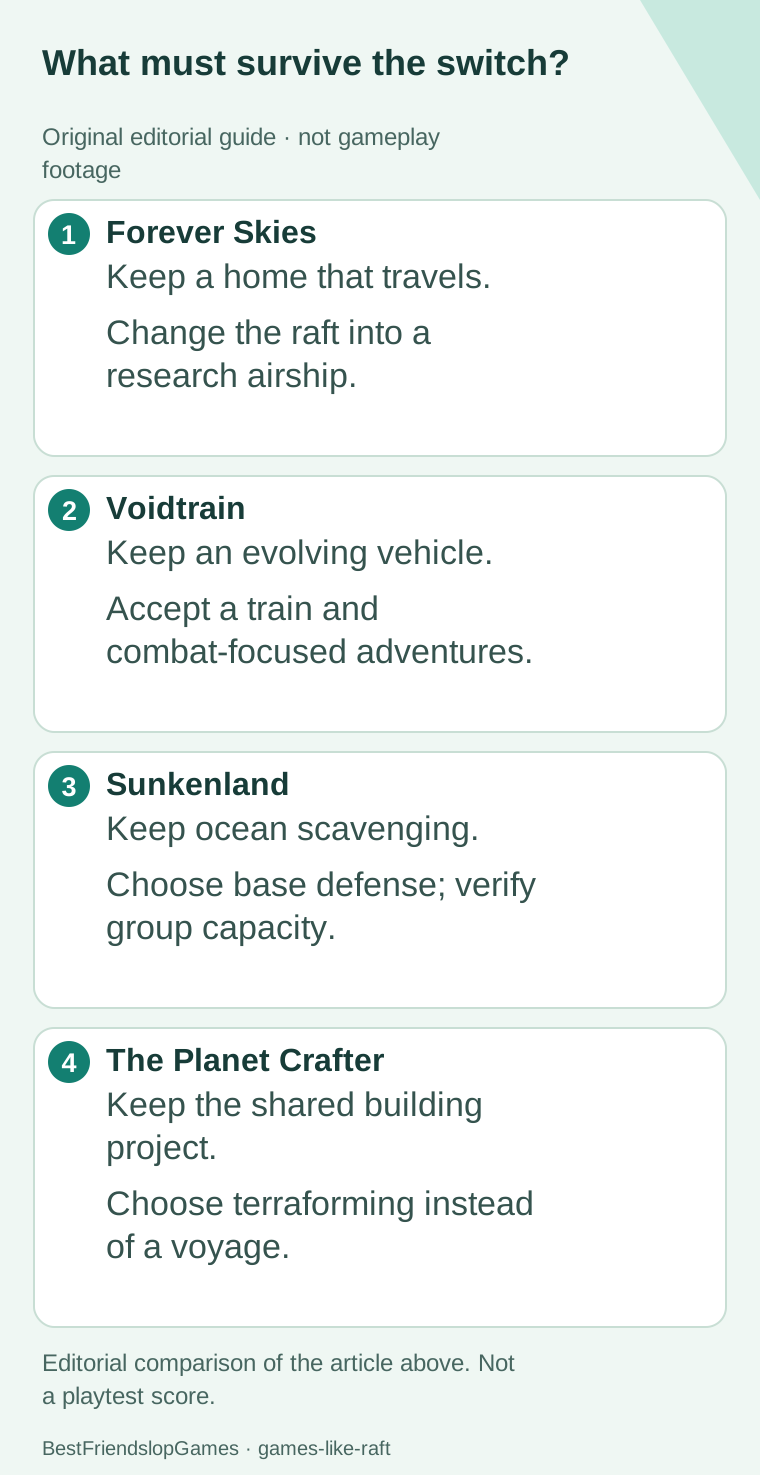
Players, modes, platforms and dated prices
Prices are USD snapshots from October 12, 2026, excluding tax, hardware, optional DLC and any separately chosen server costs. Online co-op does not establish couch split-screen or cross-store compatibility. None of these checked Steam feature lists documents local split-screen; do not buy one assuming a second person can join on the same PC.
| Game | Documented group size | Checked mode and platform | US base-game price | Keep this / accept this change |
|---|---|---|---|---|
| Forever Skies | Solo or you plus up to 3 friends: 4 total | Online co-op; Windows Steam | $29.99 | A customizable travelling home / an airship and ruined Earth instead of a raft |
| Voidtrain | Solo or up to 4 people total | Online co-op; Windows Steam | $29.99 | An expandable travelling workshop / trains, weapons and combat encounters |
| Sunkenland | Online co-op confirmed; numerical maximum not verified in the checked official description | Solo and online co-op; Windows Steam | $19.99 | Ocean scavenging and a home base / settlement defense rather than the same mobile-home loop |
| The Planet Crafter | Short description: 1–10 players; detailed text also says 1–10+ | Solo and online co-op; Windows Steam | $23.99 | Shared crafting and visible progress / terraforming rather than an ocean voyage |
Official table sources: Forever Skies, Voidtrain, Sunkenland, and The Planet Crafter. For Planet Crafter, this guide uses the explicit 1–10 range for planning, not a claimed hard technical ceiling or a guarantee for groups beyond ten. Sunkenland remains a conditional recommendation until your intended group size is confirmed.
Forever Skies: take your home into the air
What stays: The developer describes an airship serving as a home, workshop and laboratory, with resource gathering and upgrades. What changes: The journey takes place around a ruined Earth, with scientific research, toxic dust and threats to the crew and ship. Group check: Solo or up to three friends, four total; online co-op on the checked Windows version. Price: $29.99. Official source.
Our fit judgment: Put this first when leaving your completed base behind is what disappoints you in other survival games. The useful similarity is not simply that both settings contain debris: the thing you improve is also the place you take onward. That can give a builder and an explorer a shared reason to care about the next upgrade. The compromise is atmosphere and activity, so do not recommend it as a peaceful holiday merely because the ship floats above the ground. Ask whether everyone wants a scientific expedition with hazards or specifically wants the familiar ocean routine. If the latter is non-negotiable, changing the vehicle will not solve the problem. For a crew larger than four, the documented group size rules this option out before price enters the conversation.
Voidtrain: trade the raft for an evolving train
What stays: The official listing describes constructing and expanding a train from a trolley, adding wagons, storage and workbenches while gathering materials. What changes: Its description also emphasizes weapons, enemy encounters, arenas and outposts. This is not evidence for a combat-free crafting trip. Group check: Solo or online co-op with up to four people total. Price: $29.99 on Windows Steam. Official source.
Our fit judgment: Choose this branch when the group wants its next improvement to belong to a vehicle and is happy for fighting to be part of the invitation. It is a better answer to “we want another shared machine to develop” than to “we want another ocean.” The distinction matters for the person who enjoyed furnishing the raft but tolerated its dangers only because friends were there. Let that person decide whether the new combat emphasis sounds welcome instead of assuming the crafting tag settles it. Conversely, a friend who wanted more action may prefer this compromise. We would agree on both a construction objective and a willingness to fight before buying, so the group's first session is not an argument over which half of the game counts as the fun part.
Sunkenland: keep the water, change the home-base problem
What stays: Officially documented activities include diving through submerged structures, collecting resources, building a base and cooperating with friends. What changes: The description includes defending a settlement from pirates and mutants, trading and raiding enemy locations. Boats and other vehicles are described separately from base building; that does not prove Raft's travelling-home loop. Group check: Online co-op is listed, but the checked official material does not establish a numerical maximum. Price: $19.99 on Windows Steam. Official source.
Our fit judgment: Consider this if returning from a dive with useful supplies is more important to your group than carrying the entire home to the next destination. Treat defense as a deliberate change in responsibility: a friend who likes designing a place to live may enjoy that project, but may not want the evening organized around protecting it. Ask which reaction is more likely before choosing on the water setting alone. We would not put Sunkenland ahead of a verified-capacity option when fitting a particular large group is the deciding requirement. An unknown limit is not evidence of unlimited seats. Keep it on a conditional shortlist, confirm the actual setup, and only then turn the attractive price into a group purchase plan.
The Planet Crafter: keep the shared project, lose the ocean
What stays: The official description documents collecting resources, constructing a base and machinery, exploration and online cooperation. What changes: The central project is making a hostile planet habitable. The developer describes environmental survival without enemy violence, plus adjustable difficulty. That is not the same as having no oxygen, thirst or other survival pressure. Group check: The store's short description gives 1–10 players; detailed text also uses 1–10+. Price: $23.99 on Windows Steam. Official source.
Our fit judgment: This is the strongest branch here for friends who remember Raft as the home they built together rather than the route they sailed. Make the destination a shared transformation instead of a vehicle. The loss is equally important: somebody attached to steering a home through new scenery is being offered a different central fantasy, not a reskin. Removing enemy fighting also does not automatically remove disagreements about efficiency. One player can still want rapid progress while another wants to decorate or explore. Agree that both are legitimate contributions before treating the lack of combat as a guarantee of a relaxed group. For five to ten remote players, its documented range makes it the clearer capacity fit in this particular shortlist, provided that everyone accepts the change of goal.
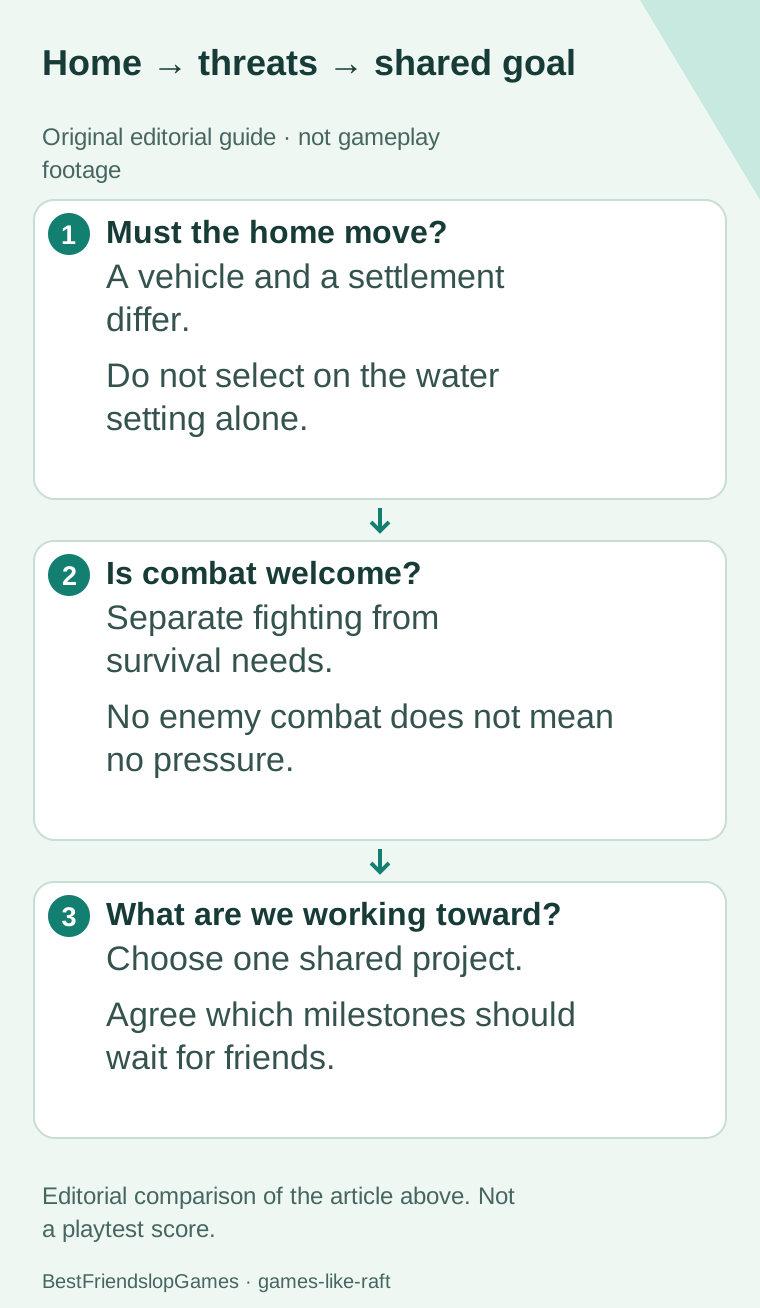
A three-question test before inviting the crew
Our project rule: Ask whether the home must move, whether combat is welcome and what everyone should be proud of at the end of the night. A moving home plus an appetite for combat points toward the train branch; a moving home plus interest in research points toward the airship branch, without promising safety. Water and defensive building point toward the settlement branch, pending its capacity check. Shared environmental progress points toward terraforming. These are editorial routes through the sourced features, not scores or predictions of enjoyment. If no branch fits, keep playing what the group already enjoys rather than making the cheapest candidate win by default. A useful comparison can rule out a purchase as well as suggest one.
For your first evening, choose one modest shared goal rather than a speed target: agree on a home improvement, a supply expedition or a construction milestone. This is a suggested group exercise, not a claim about any game's tutorial or time to completion.
Our attendance rule: Separate “can join the world” from “will be present when we move the project forward.” A group that loved discovering Raft's next destination together may dislike returning after friends have already made the important discoveries. Agree beforehand which milestones should wait and which routine jobs anyone may continue. Do not assume a multiplayer label promises an always-online server, transferable hosting or identical progression for absent players; those features require their own current documentation. If irregular attendance is your biggest problem, resolve the save and host arrangements before buying copies. That practical check can matter more than how closely a trailer resembles an ocean voyage, because the best shared project is of little use when the intended crew cannot return to it together.
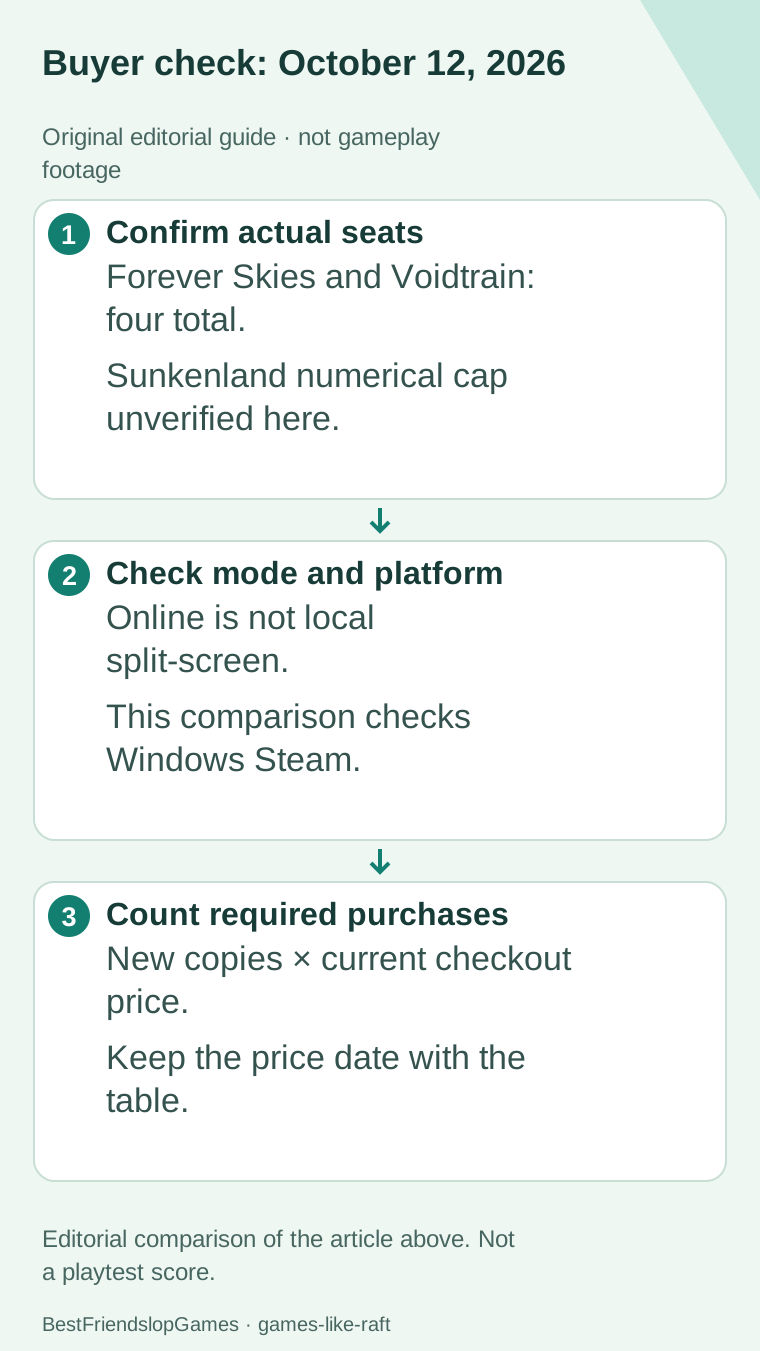
Budget the crew, not the largest advertised lobby
For four new Steam purchases, the documented prices give Forever Skies: 4 × $29.99 = $119.96, Voidtrain: 4 × $29.99 = $119.96, and The Planet Crafter: 4 × $23.99 = $95.96. Those games' cited ranges accommodate four. Sunkenland's checked per-copy price is $19.99, but we do not present a four-seat package as verified while its capacity is unresolved.
For six new Planet Crafter copies, the same dated arithmetic is 6 × $23.99 = $143.94. This is an example within the cited range, not a statement that six is the ideal group size. Existing ownership reduces the number of purchases; optional extras are not included.
Our budget rule: Count the people who actually intend to play and the copies they still need, not every person in the group chat. Then compare only games that satisfy the mode and capacity requirements. A smaller number on a store page is not a saving if the plan needs a feature that has not been confirmed. If the group splits between two alternatives, avoid buying both on the assumption that everybody will follow later; settle the shared activity first. Keep the price-check date attached when forwarding this table to friends, and check the store again at checkout. A synchronized decision about one viable setup is more useful than a theoretical bargain that leaves part of the crew watching.
Quick answers
Which game most closely keeps Raft's moving home?
Forever Skies and Voidtrain are the first branches in this guide because their official descriptions make a customizable travelling vehicle central. Choose between the airship research setting and the train's construction-and-combat direction. This is a mechanical comparison, not a claim of identical controls or pacing.
Which option works for more than four friends?
The Planet Crafter explicitly describes 1–10 players in its short store description. Forever Skies and Voidtrain document four total. Sunkenland's numerical limit was not verified here, so it should not be sold to a larger group on this table alone.
Which choice avoids enemy combat?
The Planet Crafter's developer describes environmental survival without enemy violence. Its survival needs still exist, and difficulty is adjustable. The other choices here include documented hostile threats or fighting; none is presented as automatically peaceful.
Can we use one PC for couch co-op?
These checked Steam listings confirm online cooperation, not local split-screen. Do not apply a one-copy couch budget to an unverified mode. The platform information here also does not establish console compatibility or cross-play with a particular other store.
For a wider group-night shortlist, return to BestFriendslopGames. If the moving home is optional and shared land exploration sounds better, compare the existing games like Valheim guide.