Games Like The Forest: Horror, Survival and Co-op Compared
For games like The Forest, start with Sons of the Forest if you want another first-person survival-horror island with building and underground exploration. Choose Green Hell for a small group's wilderness survival and bodily needs, Abiotic Factor for crafting and dangerous discoveries in a science-fiction facility, or Valheim for shared bases and expeditions without keeping The Forest's horror premise. The closest choice depends on whether your group refuses to lose the fear, the survival work or the home you build together.
Official sources and US Steam base-game prices checked October 14, 2026. This is a source-based comparison with editorial recommendations, not a hands-on test. Player counts include the host. Platform and price checks below concern the Steam editions, not console parity, subscription access or VR editions.
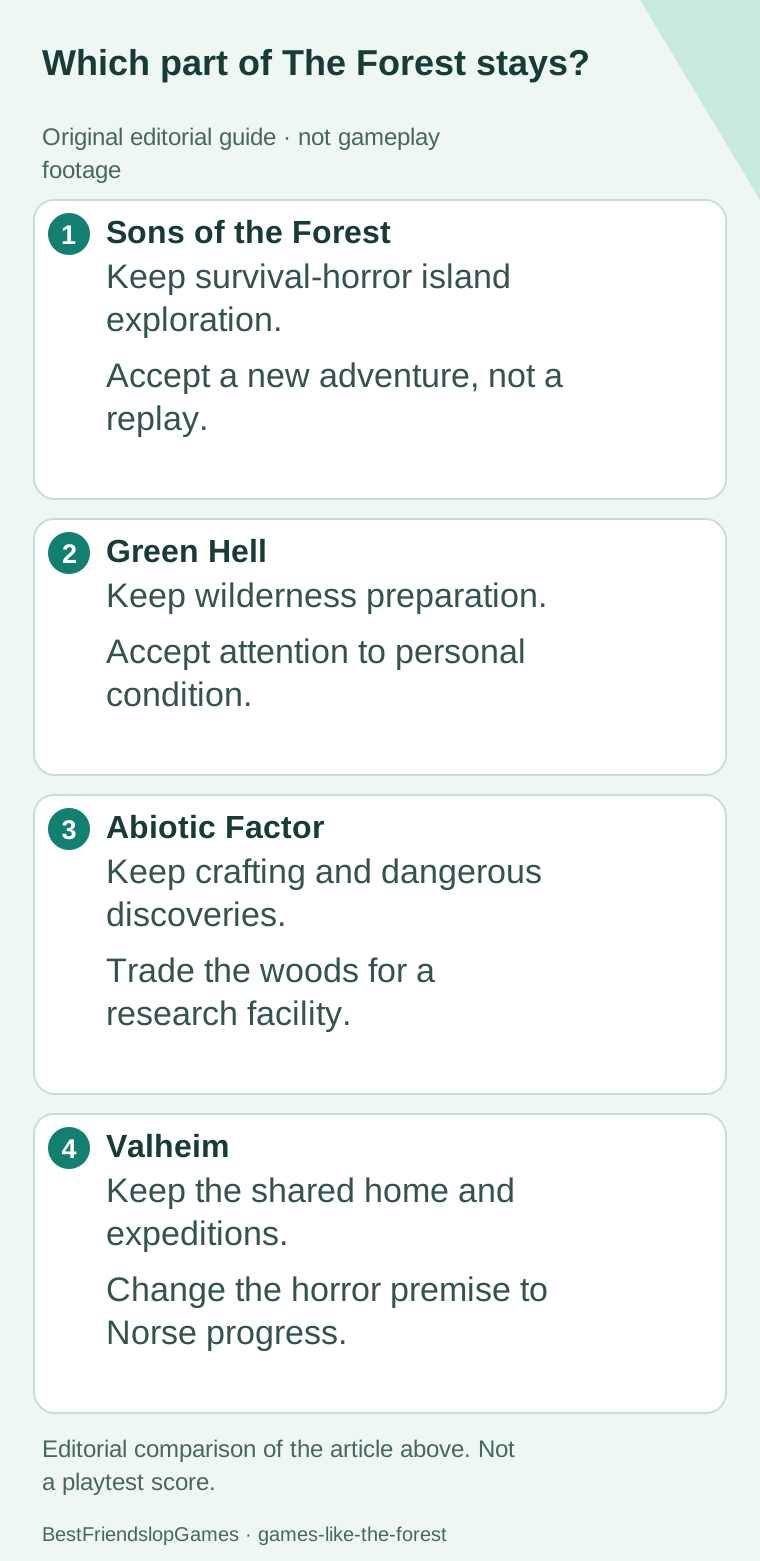
Decide which part of The Forest must stay
The Forest's official store description combines caves, resource gathering, shelters, perimeter defenses and hostile mutants. Those are different reasons to want a replacement. A wilderness backdrop alone does not establish the same horror, and a frightening game does not necessarily give your friends a persistent building project.
Our selection rule: Before picking a name, ask everyone to finish this sentence: the part I would miss most is blank. Then separate their answers into discovery, danger and ownership. Discovery means wanting an unfamiliar place to investigate; danger means wanting that investigation to feel unsafe; ownership means caring about the refuge and supplies the group has made. A candidate that meets two preferences can still fail the third badly. For example, someone who enjoyed tending camp may accept a change of setting that disappoints the friend who mainly wanted a disturbing mystery. Choose the shared requirement first and state the compromise aloud. That produces a more useful shortlist than counting trees, axes or monsters in screenshots.
Players, modes, platforms and dated prices
These are October 14, 2026 USD snapshots. Green Hell and Abiotic Factor were discounted at the check; their regular prices remain visible. All four list online co-op. The checked feature lists do not establish local split-screen; LAN co-op is not the same thing as sharing one screen.
| Game | Documented players | Checked multiplayer mode | Steam desktop platforms | US base-game price | What you trade |
|---|---|---|---|---|---|
| Sons of the Forest | Solo; dedicated-server guide allows 1–8 | Online co-op; dedicated hosting documented | Windows | $29.99 | Closest premise, but another island and adventure rather than the original discovery |
| Green Hell | Solo; up to 4 in story co-op | Online co-op | Windows | $2.79 sale; $27.99 regular | Emphasize jungle survival and personal condition, not an identical mutant-island loop |
| Abiotic Factor | 1–6 | Online and LAN co-op | Windows | $27.99 sale; $34.99 regular | Replace open woodland with a science-fiction research complex |
| Valheim | 1–10 | Online co-op | Windows, macOS, Linux | $29.99 | Keep expeditions and building; change to Norse progression and a third-person view |
Primary listings: Sons of the Forest, Green Hell, Abiotic Factor, Valheim. Green Hell's numerical story limit comes from its June 18, 2020 developer update, rechecked alongside the current listing. Sons' server limit comes from the configuration guide linked by Endnight's Patch 07: MaxPlayers accepts 1–8. These dates identify the evidence, not new feature announcements.
Sons of the Forest: the closest premise
What stays: The official listing describes first-person survival horror, building, shared defenses and exploration above and below ground. What changes: It is a different island expedition, with seasonal resource pressures. The store lists solo and online cooperation; the dedicated-server guide documents capacity separately.
Our fit judgment: Put this first when the group wants familiarity without returning to the same discoveries. It asks for the smallest change in the kind of evening you are trying to arrange: prepare a refuge, venture into something threatening and come back with a reason to improve your situation. That is a premise-based recommendation, not a claim that every system is better. The important test is whether the appeal was the combination of activities or the shock of discovering it for the first time. A sequel can preserve the combination; no recommendation can promise to recreate your original surprise. If your friends actually want a different relationship between building and exploration, do not stop the comparison at the shared name.
Green Hell: survival pressure rather than the same monsters
What stays: Shelter construction, gathering, a story and cooperative survival. What changes: The developer's current description emphasizes Amazonian conditions, wound inspection and mental health. The story supports up to four players. This comparison covers ordinary Green Hell on Steam, not Green Hell VR.
Our fit judgment: Consider this when your group remembers the satisfaction of getting through an expedition with adequate supplies more fondly than the enemy designs. The useful question is not whether a jungle looks enough like a forest; it is whether friends welcome paying attention to their characters' condition. Turning uncertainty into a shared checklist can be satisfying for players who enjoy preparation, but feel like interruptions to those who primarily want the next unsettling discovery. We would resolve that disagreement before taking advantage of a low sale price. The discount makes trying it cheaper, not mechanically closer. It also cannot solve a fifth person's exclusion from a four-person story session, however well the theme fits everybody else.
Abiotic Factor: keep dangerous discoveries, change the wilderness
What stays: Cooperative scavenging, crafted equipment, a base and exploration among hostile beings. What changes: The official listing places one to six scientists in an underground research facility with paranormal threats and improvised technology. Steam lists online and LAN cooperation. Its listed full release is July 22, 2025; a historical Early Access review is not its current release status.
Our fit judgment: This is the strongest change of scenery on the shortlist for friends who want to keep asking what is beyond the next boundary. Treat the setting change as a deliberate choice, not a minor cosmetic swap. Someone who loved making a place feel habitable may be willing to build a refuge in unfamiliar surroundings; someone who specifically wants a forest retreat may not. We would pitch it as a shared investigation supported by crafting, rather than as a forest game indoors. Ask whether the whole crew is interested in the scientific theme before buying. Six available seats answer the attendance question, but do not settle the more important question of whether those six people want the same adventure.
Valheim: keep the shared project, change the horror promise
What stays: Bases, equipment preparation and ventures into dangerous environments. What changes: The official store describes a procedurally generated Norse world, regional bosses and progression through their defeat. It supports one to ten players. Its third-person presentation also changes your viewpoint from The Forest.
Our fit judgment: Use this branch when the home, equipment and next group objective matter more than preserving a horror narrative. The comparison works best as a conscious subtraction: you keep the reason to prepare and travel together while letting go of the promise that the world will unsettle you in the same way. Do not sell that subtraction to a reluctant friend as an upgrade. A group may enjoy planning an ambitious shared project and still miss the mood that originally brought it together. We would ask for one acceptable shared objective before choosing this option, such as preparing for the next expedition together. If nobody can agree on a project, the larger capacity alone is not a reason to prefer it.
Match the party before choosing the atmosphere
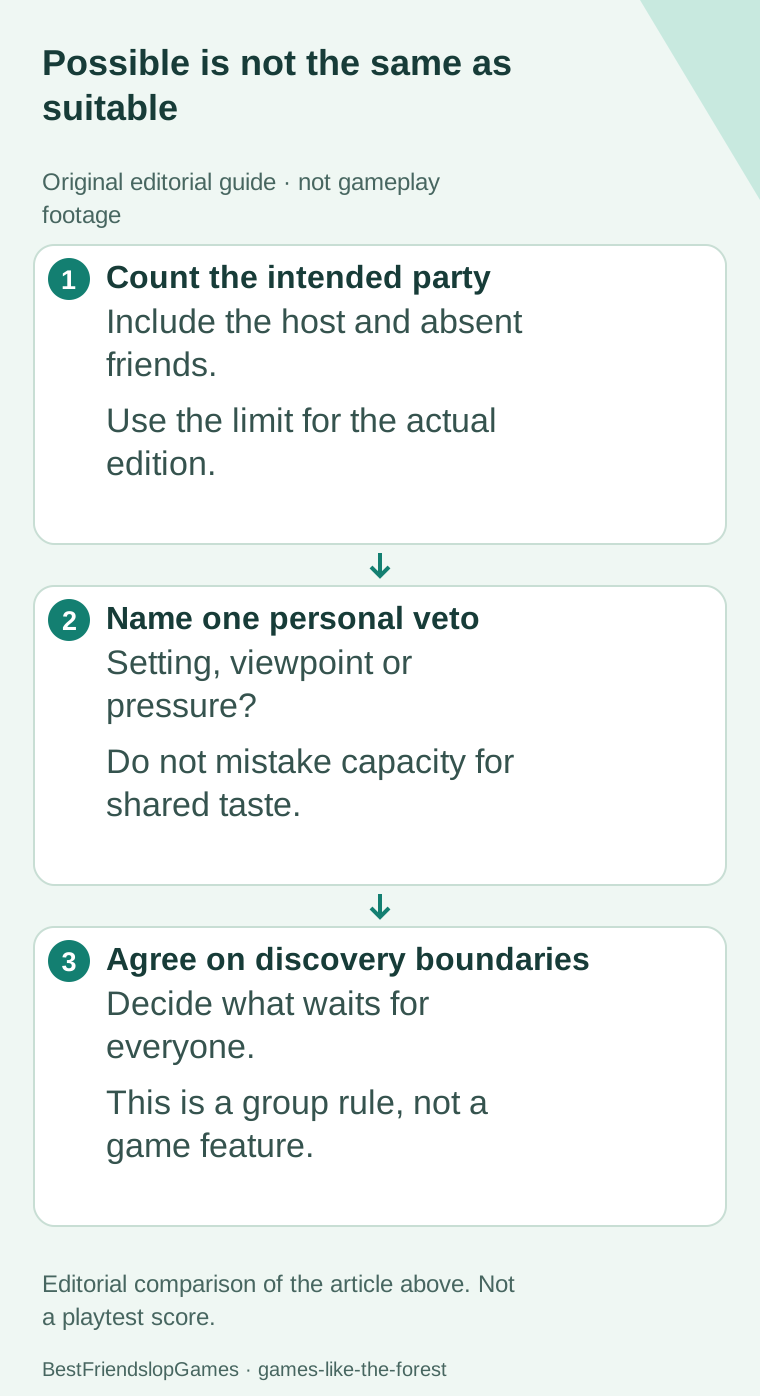
For a five- or six-person Steam group, Abiotic Factor's documented capacity fits; Green Hell's four-person story does not. Valheim documents room for up to ten. Sons' developer-linked server guide documents up to eight on that hosting route. Do not infer extra seats from a server provider's larger advertised package or transfer these figures to unverified editions.
Our group rule: Build the shortlist around the largest group that actually intends to play together, not the two people who happen to be online while you shop. A four-person game is an honest option for four friends, but an awkward recommendation for five unless someone has freely agreed to a different arrangement. Then give each person one veto concerning the experience: a camera they dislike, a setting they do not want or a kind of pressure they do not enjoy. Capacity filters the possible choices; those vetoes filter the acceptable ones. Keep the distinction visible. Otherwise a table full of correct numbers can still lead to a purchase the group never uses together.
Agree on what waits for everyone
Sons of the Forest's server guide documents server ownership, saves and an idle-day-cycle setting. That is evidence of configurable hosting, not a promise that every candidate handles shared progress identically. Green Hell's dated story-co-op update explicitly separates single-player and multiplayer saves. Check the edition and current hosting setup before starting a long shared playthrough.
Our access rule: Agree on a discovery boundary as well as a meeting time. Friends can divide routine preparation without necessarily agreeing that one person should uncover every important location before the others return. Decide which discoveries should wait, where to leave a short recap and who is responsible for the save arrangement. These are proposed social rules, not built-in protections we claim the games provide. They matter especially when one enthusiastic player has much more free time than the rest. A server being reachable does not by itself make a shared adventure feel shared. If the group's main attraction is discovery together, protect that experience explicitly rather than assuming more flexible access automatically solves the scheduling problem.
Budget the actual group, not an imagined maximum lobby
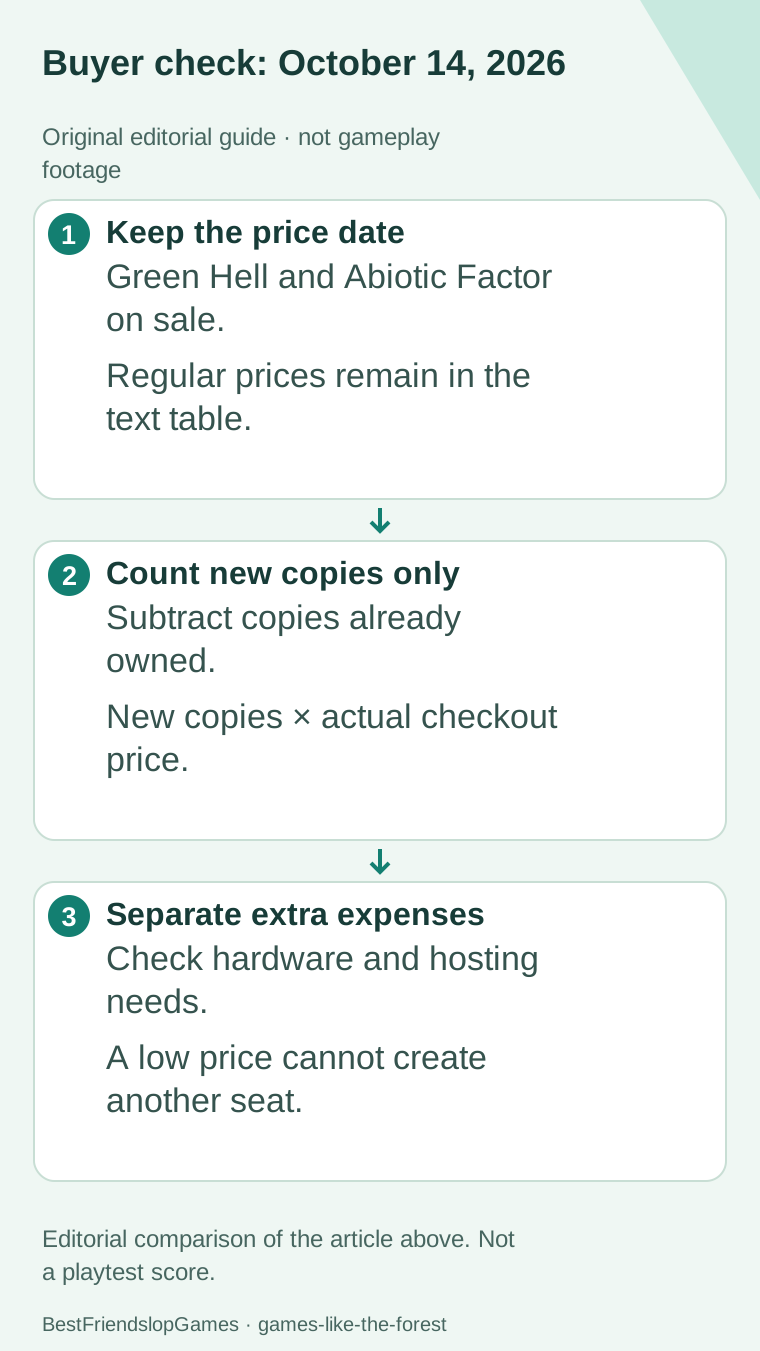
For four new Steam base-game copies, the October 14 prices give Sons of the Forest 4 × $29.99 = $119.96, Green Hell 4 × $2.79 = $11.16 on sale ($111.96 at its listed regular price), Abiotic Factor 4 × $27.99 = $111.96 on sale ($139.96 regular), and Valheim 4 × $29.99 = $119.96. These are arithmetic from the official store snapshots, not checkout guarantees; tax, hardware, subscriptions, optional extras and server costs are excluded.
Our budget rule: Compare the cost of the viable shortlist only after resolving the headcount and preference checks. A cheap choice that leaves somebody out is not a cheaper version of a full-group evening; it is a different plan. Likewise, multiplying by the maximum lobby can make an ordinary purchase look unnecessarily expensive when only a pair intends to play. Count new copies actually needed, subtract copies already owned, and have each buyer check their regional checkout. Treat sale and regular prices as separate scenarios rather than blending them into an invented typical price. Finally, identify any hosting expense separately. Keeping the calculation simple makes it easier to change when the party or the offer changes.
Questions before switching from The Forest
What is the closest alternative overall?
Our premise-based first pick is Sons of the Forest: it retains the survival-horror island, building and underground exploration combination. That is an editorial match, not a tested ranking or a promise of identical mechanics.
Which option fits five friends?
Abiotic Factor documents one to six players, Valheim one to ten, and Sons' dedicated-server configuration accepts up to eight. Green Hell's documented story co-op limit is four, so it does not fit that five-person plan.
Does less emphasis on monsters mean easier survival?
No. Green Hell's official description includes bodily-condition and mental-health systems. Changing the kind of threat does not establish a lower difficulty. Decide whether the pressure itself appeals to your group rather than treating a setting as a difficulty rating.
Can we play these on one couch and one PC?
Do not buy on that assumption. The checked Steam lists establish online co-op, and Abiotic Factor also lists LAN co-op, but none establishes local split-screen. Multiple computers on a local network are a different setup from multiple people sharing one screen.
For broader group choices, return to BestFriendslopGames. For a separate building-and-progression comparison, see games like Valheim.