Games Like Sea of Thieves: Shared Ships, Crew Sizes and Tradeoffs
For games like Sea of Thieves, choose Void Crew for working together aboard one ship, Raft for an ocean voyage built around a shared floating home, Barotrauma for a larger crew handling dangerous ship systems, or Wildgate for ship combat against rival crews. They preserve different parts of the experience: none is simply Sea of Thieves with another name.
This is a source-based comparison, not a claim of hands-on testing. The tables separate official features from our editorial fit judgments and use October 16, 2026 US Steam price checks. Start with the job you enjoy aboard the ship, then check the size and setup of your actual group.
First decide whether you want a new ship or a different kind of risk
Sea of Thieves combines sailing, exploration, treasure and encounters with other crews. If your only objection is being attacked by other players, first look at Rare's Safer Seas explanation: it documents private play with your chosen crew, without roaming rival crews. That does not mean every feature or progression rule is identical to High Seas. Its article has a later correction to the original reward figures, so this guide does not reuse those launch numbers.
Our selection rule: Separate two wishes that often sound identical in a group chat: “we want to operate a ship together” and “we want to sail somewhere beautiful.” One puts shared responsibilities first; the other puts the setting first. Add a third question about whether other human crews are welcome opponents. A space game can satisfy the first wish while completely missing the second, and a cooperative game can still place your team inside a competitive match. Agree on these distinctions before exchanging recommendations. Otherwise everyone can approve the phrase “another Sea of Thieves” while imagining a different evening. The choices below make the compromise explicit instead of pretending there is a universal replacement.
Crew size, mode, platform and budget at a glance
Counts refer to the specified setup, including the host where applicable. The platform column covers the Steam desktop editions checked, not every console edition. None of the four listings checked here establishes local shared-screen play; do not read online co-op as couch co-op. Prices are for the base game, excluding optional extras, tax and hardware.
| Game and official store | Crew / player-count evidence | Mode compared | Steam desktop platform | US base price, October 16, 2026 |
|---|---|---|---|---|
| Void Crew | 1–6, current official listing | Online co-op; first-person spaceship roguelite | Windows | $24.99 |
| Raft | Host-dependent; developer reported a 13-person test in 2018, not a fixed cap | Solo / online co-op; ocean survival and building | Windows | $19.99 |
| Barotrauma | Up to 16; bots can supplement the crew | Online co-op submarine simulation; solo and other modes also offered | Windows, macOS, Linux | $34.99 |
| Wildgate | Four-person ship crew in developer guide; separate Fleet Battle teams can reach 12 | Online PvPvE; ship combat and extraction | Windows | $9.99 |
Raft's developer support answer is dated July 18, 2018 and makes performance dependent on the host's hardware and connection. We do not convert its successful test into a guaranteed modern maximum. Wildgate's four-person crew is documented in its July 21, 2025 developer ship guide; the current store separately describes Fleet Battle teams of up to 12. A team total is not evidence of a 12-person ship or a 12-person invite party.
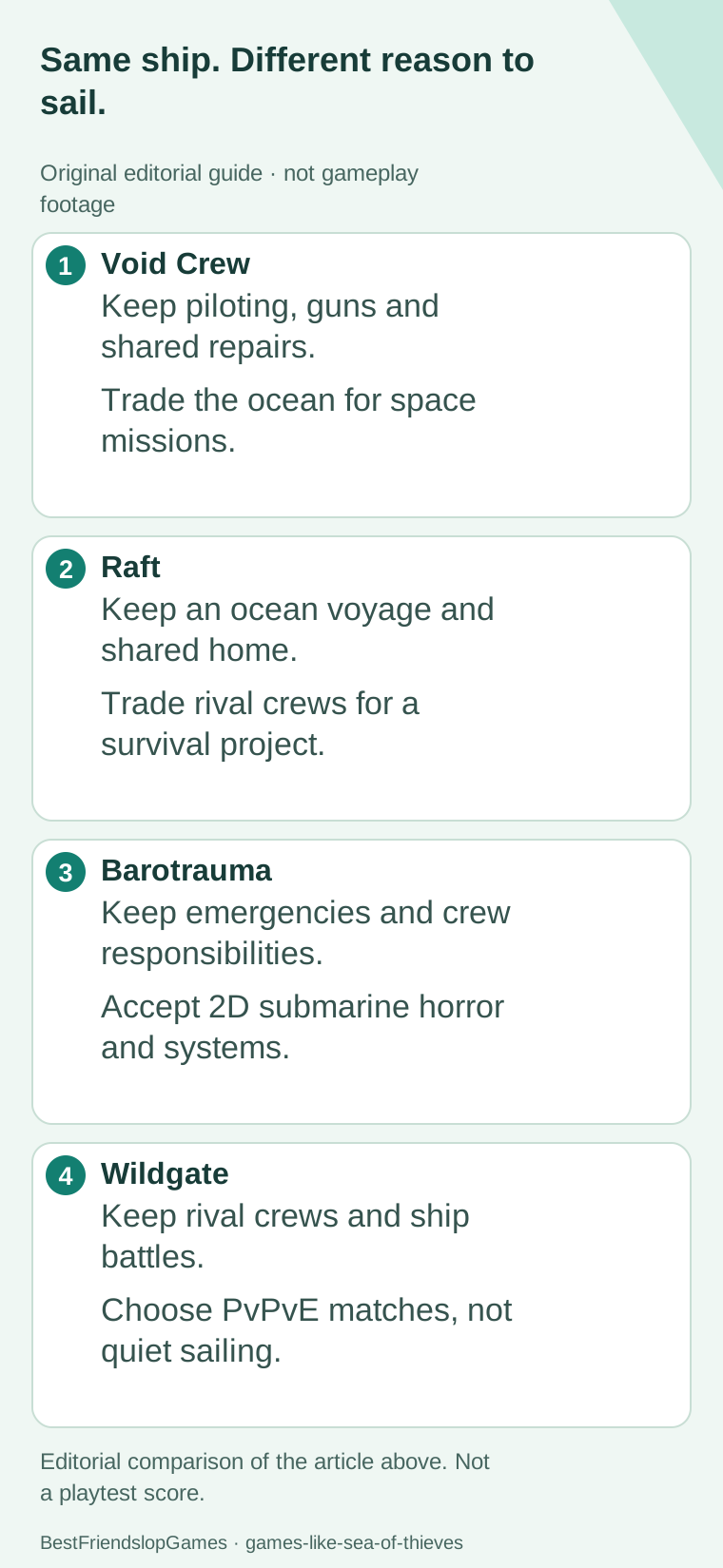
Void Crew: keep the shared jobs, trade the ocean for space
What stays: Friends operate the same vessel, splitting attention between movement, weapons and keeping the ship functional. What changes: The setting and structure become a first-person space adventure with roguelite missions, rather than a pirate world.
Its current official page explicitly says 1–6 players. Tasks include piloting, turrets, emergency repairs, power-cell work and leaving the ship to repair or collect resources. The crew can change responsibilities and ship systems. Older four-player descriptions should not override today's official listing.
Our fit judgment: This is our starting choice when somebody in the group enjoys being the person who keeps everyone else alive while another handles the guns. The reason is shared dependence, not just the presence of a vehicle. Ask whether each friend is happy to spend part of the evening doing work that is useful without always being spectacular. If everyone only wants to shoot, a shared vessel can become an argument about who has to handle the interruptions. We would agree on rotating responsibilities before choosing permanent favorites. That is a suggested group habit, not an enforced game rule, and it matters more to this recommendation than making the spaceship look like a galleon.
Raft: keep the sea and the shared home, change the objective
What stays: An ocean journey, island stops and a vessel that everybody contributes to. What changes: Gathering, crafting and expanding a floating home take priority over contests with rival pirate crews.
The official description includes hunger, thirst, sharks, exploration and story destinations. A quieter social plan is therefore not the same as a danger-free game. Its online co-op supports friends working on the same survival project, but the checked official capacity answer does not give a hard numerical ceiling independent of the host.
Our fit judgment: Pick Raft when the satisfying part of a voyage is returning with something that makes the group's home better. This changes what counts as a successful evening: you can agree on an improvement rather than defining success through beating another crew. The compromise is that maintaining supplies and constructing things must sound enjoyable, not like chores between naval fights. If one friend wants a decorative home while another wants to advance through every destination immediately, decide which discoveries should wait for everybody. We would make that agreement before starting a shared project. It keeps a cooperative world from becoming one person's checklist while the rest feel like passengers on their own raft.
For a different floating-home comparison, see our existing games like Raft guide.
Barotrauma: keep the crew emergencies, accept the horror and systems
What stays: A vessel can survive because several people notice and fix different problems. What changes: A 2D submarine on Europa, survival horror and detailed machinery replace an open-air pirate adventure.
The current store lists up to 16 players, with bots available to supplement people. Classes divide skills and tasks, while systems include sonar, the reactor, weapons, engines, pumps, crafting and medicine. The game also permits betrayal and offers multiple modes; choose the intended cooperative setup rather than assuming every public lobby shares your group's goals.
Our fit judgment: Consider this for friends who find the emergency repair itself interesting, rather than merely an interruption to the action. A larger advertised capacity is useful only if the whole group accepts the presentation and the responsibilities. Someone who wants bright seascapes may dislike the very atmosphere that attracts the rest of the crew. We would therefore ask about horror tolerance before celebrating the extra seats. Also decide whether deliberate sabotage is funny to everyone or just to its instigator. Setting a cooperative expectation is a social agreement, not a claim that the software removes every possibility of mischief. The ship should be a shared problem, not an excuse to spoil another person's evening.
Wildgate: keep rival crews and boarding, switch to match-based space combat
What stays: Your crew looks after its ship, searches for useful loot and confronts other crews. What changes: It is a first-person PvPvE shooter organized around matches, not a substitute pirate world for relaxed sightseeing.
The current store distinguishes Artifact Brawl, Fleet Battle and Treasure Hunt. It describes competing for an Artifact or defeating rival ships, and maintaining supplies such as fuel and ammunition. The developer's four-person ship guide explains the shared-vessel setup; current mode-specific team sizes must be read separately. The observed $9.99 US base price is today's direct Steam check, not an older launch price or a claim that the game is free.
Our fit judgment: Put Wildgate on the shortlist if your group specifically wants other crews to interfere with its plan. That interference is the attraction, not a surprise to hide behind the word cooperative. It is a poor answer to someone whose reason for leaving Sea of Thieves is unwanted player conflict. For a willing competitive crew, first agree on whether you enjoy protecting the ship, boarding another one, or improvising between those responsibilities. Then examine the selected mode together. We would not promise fast matchmaking, a particular opponent skill level or a guaranteed session length from a store description. Those live conditions require a separate check at the time and place you intend to play.
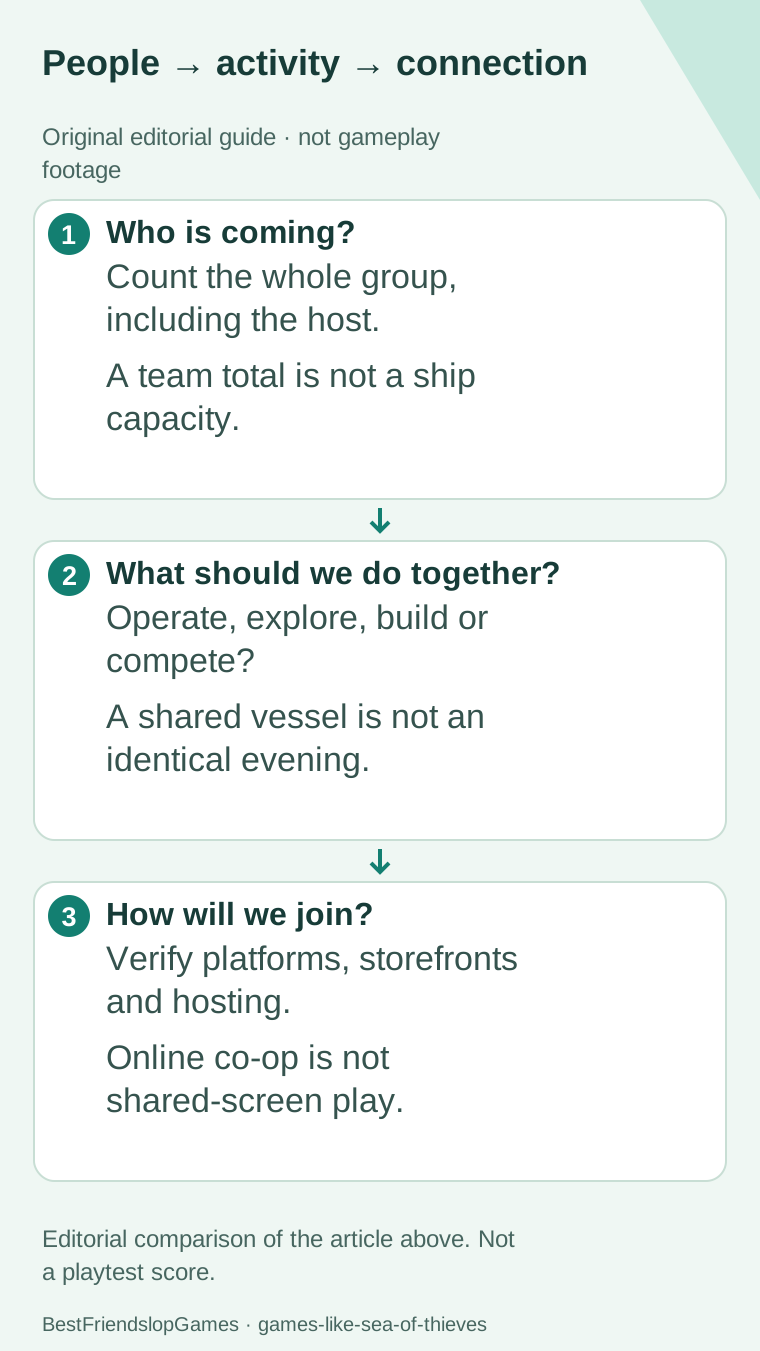
A three-question crew check before buying
Our group rule: Write the full guest list before choosing a vessel, including the person who usually hosts. Next to each name, note whether they want competition, exploration or maintenance-heavy cooperation. Start by removing games that fail a genuine requirement rather than counting how many superficial similarities each game has. A bigger lobby is not automatically a better answer if several people dislike its main activity. Conversely, a smaller familiar-looking option should not win by leaving somebody out without discussion. For a group that changes size from night to night, name the intended gathering explicitly. “This is our smaller-crew option” is more honest than promising one purchase that covers every possible attendance pattern.
Our access rule: After checking seats, check how the group actually connects. List each person's platform and storefront, then verify that precise combination with official documentation. These Steam desktop checks do not promise compatibility with every console version, and an online feature does not create a shared-screen mode. For host-dependent setups, also ask who can host reliably and what happens when that person is absent. Keep unknowns visible until answered: they are practical purchasing conditions, not empty boxes to fill with an assumed number. This is particularly important when one enthusiastic person is inviting friends who have never used the game. Their ability to join matters more than the largest number printed anywhere on its store page.
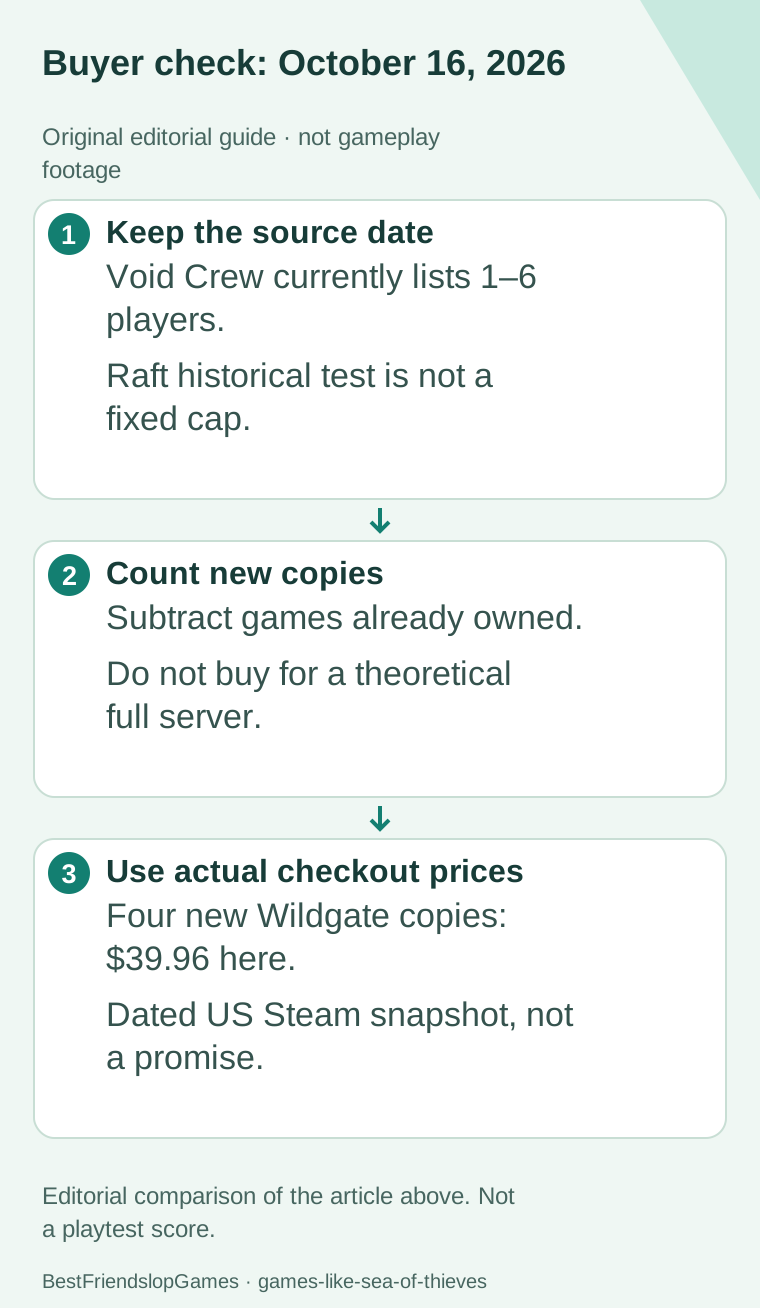
Price the intended gathering, not a theoretical full server
If four friends each need a new Steam copy, the dated base-game arithmetic is:
- Void Crew: 4 × $24.99 = $99.96.
- Raft: 4 × $19.99 = $79.96. This is a purchasing scenario, not a claim of a four-player maximum or a host-performance guarantee.
- Barotrauma: 4 × $34.99 = $139.96. There is no reason to buy 16 copies just because the listing supports that many players.
- Wildgate: 4 × $9.99 = $39.96, using the observed US Steam price.
For six new Void Crew owners, 6 × $24.99 = $149.94. That example uses its current six-player capacity, not a mod. All totals exclude taxes, optional content, hardware and any separate platform-service costs. Recheck your checkout price; these are October 16 snapshots, not permanent offers.
Our budget rule: Count the copies your group does not already own, then compare the cost of the compatible choices. Do not multiply a headline server size by the price and call that your group's budget. A purchase can be affordable on paper and still be wasteful if the selected mode does not allow your intended party or requires a setup somebody lacks. We would settle those questions before asking everyone to pay, then keep the actual per-person amount visible in the invitation. If purchases happen on different days, check each price again rather than expecting an earlier offer to remain. Treat the amount saved as a benefit after choosing a suitable game, not as proof that the game is suitable.
Quick questions from the crew
Which pick is closest to doing jobs on the same ship?
Our first choice is Void Crew for piloting, guns and repairs in the same cooperative vessel. Barotrauma is the alternative if your group wants more machinery-focused survival and accepts its 2D horror presentation. That is an editorial fit judgment, not a claim of identical mechanics.
Which options deserve a look for more than four friends?
Void Crew's current listing supports 1–6; Barotrauma's supports up to 16. Raft's official answer is host-dependent rather than a verified fixed cap. Do not interpret Wildgate's Fleet Battle team total as a larger single-ship invitation limit.
What if we only want to remove hostile player crews?
Check Sea of Thieves' own Safer Seas option first. For a different cooperative activity, consider Void Crew's missions or Raft's survival project. Wildgate's compared modes are PvPvE, so it should not be sold as the escape from player competition.
Which is best for pirate scenery?
None of these is an exact replacement for Sea of Thieves' pirate atmosphere. Raft keeps an ocean setting but changes the purpose of the voyage; the others change the world much more. If that atmosphere is non-negotiable, be cautious about buying solely because a game has a shared ship.
Explore other group activities in the Best Friendslop Games directory.