Games Like Human Fall Flat: Physics Puzzles, Party Sizes and Tradeoffs
The best games like Human Fall Flat depend on what you want to keep: PHOGS! for two-person physical puzzles, Totally Reliable Delivery Service for ragdoll teamwork and improvised deliveries, Heave Ho for grabbing and swinging together, or Chained Together for coordinated climbing with higher stakes. None is an exact replacement for Human Fall Flat's open-ended puzzle levels. Choose the shared activity first, then check the local or online setup below.
Checked October 17, 2026. This is a source-checked comparison and editorial decision guide, not a hands-on review. Prices are dated US Steam base-game snapshots; console editions, subscriptions, taxes and hardware are outside those prices. Return to the BestFriendslopGames directory for other kinds of group games.
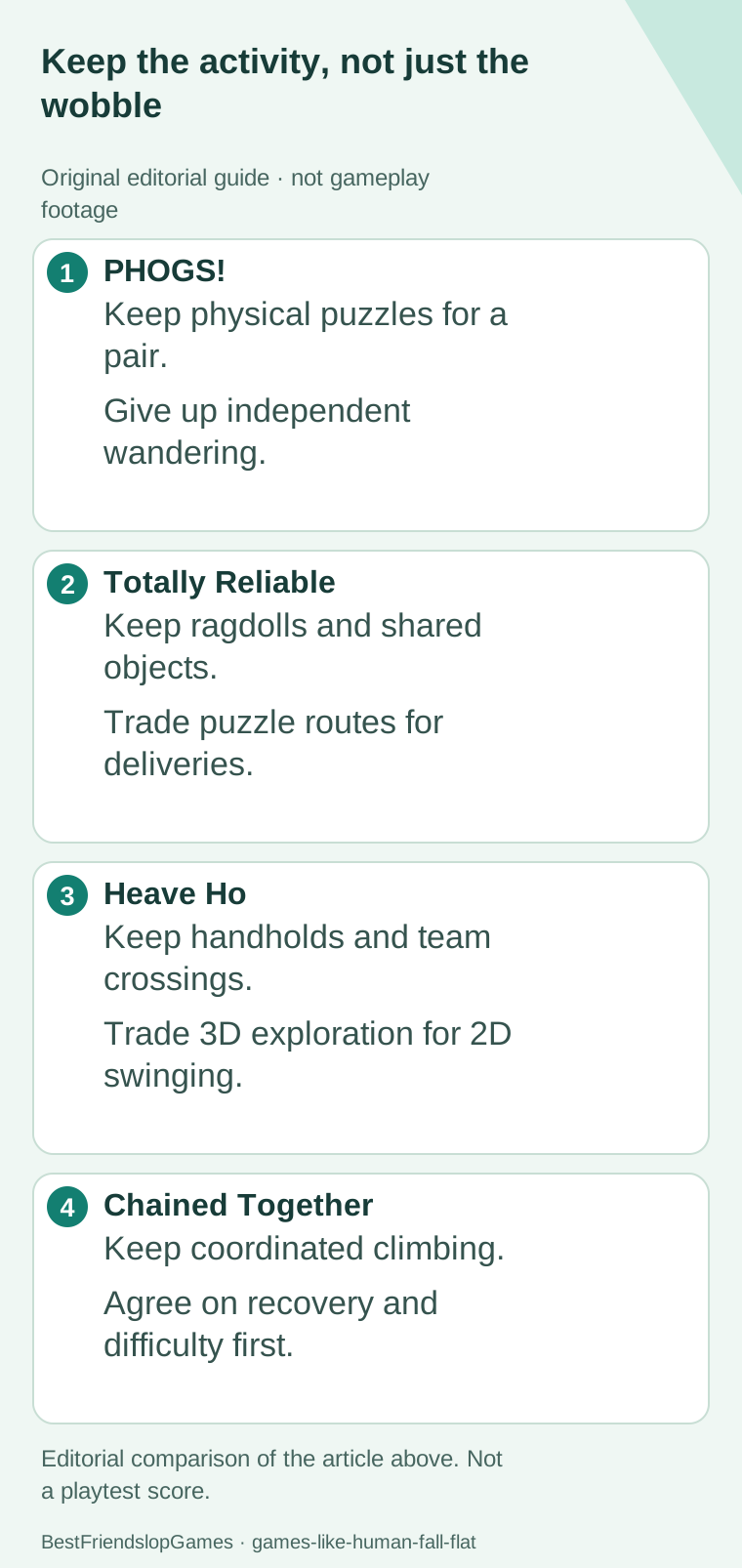
Players, modes, platforms and dated prices
Each game name links to its official Steam listing. The platform column describes the desktop editions listed there, not every console release or a promise of crossplay. A local mode and an online mode do not, by themselves, confirm that local and remote players can mix in one session.
| Alternative | Documented players and connection | Steam desktop platforms | US base price, October 17 | What you keep; what you give up |
|---|---|---|---|---|
| PHOGS! | Solo or 2-player co-op; local/shared-controller and online | Windows | $4.99 sale; $24.99 regular | Physical puzzle cooperation; a linked pair instead of a larger independent group |
| Totally Reliable Delivery Service | Current publisher advertises you plus up to 4 friends; local and online supported, separate local cap not confirmed here | Windows, macOS | $1.49 sale; $14.99 regular | Ragdoll object handling; delivery jobs instead of dreamscape puzzle routes |
| Heave Ho | Up to 4; couch co-op/versus, remote play through Steam Remote Play Together | Windows, macOS | $9.99 | Grabbing teammates and coordinated movement; 2D traversal instead of 3D exploration |
| Chained Together | 1–4; local and online co-op | Windows | $3.99 sale; $4.99 regular | Shared climbing and physics; a connected ascent instead of separate puzzle experiments |
For the reference point, Human Fall Flat's current Steam page describes up to 8 online players and lists split-screen support. Its August 22, 2019 PC announcement documents two-player local play. That local count is historical publisher documentation, cross-checked against today's split-screen feature, not a new playtest.
Totally Reliable needs a qualification: Atari's current product description explicitly describes you and up to four friends. That implies five total, while older four-player references still circulate. Its official game site and current Steam description also mention four friends. We have not independently established the local split-screen ceiling for every edition; do not buy five couch seats from that marketing total.
Our selection rule: Treat similarity as three separate questions: what do your hands do, what is the group trying to accomplish, and what happens when somebody gets it wrong? A game can match the wobbling bodies while changing the entire reason to cooperate. For a group that enjoyed finding an unexpected route around a puzzle, replacing the level with a race could preserve the laughter but lose the discovery. For a group that mostly enjoyed rescuing a dangling friend, a smaller traversal game may be the better fit. Ask everyone to name one moment they want to repeat before choosing a candidate; a shared memory is more useful than matching an art style.
PHOGS! — keep physical puzzles, narrow the group to a pair
What stays: Cooperative manipulation of a physical character to solve environmental problems. What changes: Two connected dog heads replace independently wandering humans. The current store describes solo, shared-controller, local and online cooperation; Coatsink's launch description establishes the linked-dog premise. This is a two-person option, not an eight-person substitute.
Our fit judgment: Choose this when your favorite Human Fall Flat moments were negotiations over an object or obstacle, rather than everyone scattering to investigate different corners. The useful test is whether both of you want to participate in the same attempt. A linked character makes a partner's preferred direction part of your own problem, so the attraction is mutual coordination rather than freedom to work independently. That can suit a couple looking for one shared puzzle to discuss, but it is the wrong answer to a larger lobby looking for more room. We would shortlist it for the pair's cooperation first, not recommend splitting a larger group merely because the game looks friendly.
Totally Reliable Delivery Service — keep the clumsy body and shared objects
What stays: Ragdoll movement, grabbing and handling objects with friends. What changes: Transporting packages, operating machinery and messing with vehicles become the central activity. Steam confirms local and online multiplayer. The current advertised total and unresolved local-cap distinction are recorded in the table rather than silently importing an old four-player specification.
Our fit judgment: This is our first comparison for a group that treated Human Fall Flat as a toolbox for silly plans. The organizing question becomes how to get a particular thing somewhere, rather than how to uncover a route through a puzzle environment. Before choosing it, ask whether the object is the challenge or just a prop for the joke. If the group wants to invent an awkward delivery method together, the shift is coherent. If the reward they miss is understanding a room's solution, a delivery sandbox may feel aimless by comparison. That is a difference in the desired evening, not evidence that either game has objectively better physics or puzzles.
Heave Ho — keep the hands, change the viewpoint
What stays: Holding onto surfaces and teammates while coordinating a crossing. What changes: The play is two-dimensional and concentrated on swinging across obstacles. The official listing specifies up to four players, couch cooperation or versus, and Steam Remote Play for remote sessions. It also says controllers are required for local multiplayer. Remote Play is not a separate native online lobby system.
Our fit judgment: Consider this if the memorable part was a chain of people trying not to let go. Removing a free-moving 3D camera can make the intended group task easier to describe: everyone can point at the same crossing and discuss the next handoff. That is an inference about the presentation, not a claim that the controls are effortless or that every player will find it easier. The tradeoff matters for explorers: a compact crossing is not a new room full of objects to test. Put it on the shortlist when coordinated execution is the attraction, and leave it below PHOGS! when solving a broader environmental puzzle matters more.
Chained Together — keep the climbing, agree on the consequences
What stays: Physical traversal that depends on coordination with other people. What changes: The chain connects the group during an upward journey. The current Steam listing supports 1–4 players locally or online and distinguishes Beginner checkpoints, Normal mode and rising flames in Lava mode. These are different choices; we do not label every run a no-checkpoint challenge.
Our fit judgment: This is the candidate for a party that wants its next climb to matter more than its next puzzle solution. The deciding question is not whether everyone can tolerate falling once, but whether they enjoy repeating a shared attempt after somebody makes a mistake. Agree on the recovery rules before interpreting frustration as a teammate problem. Beginner mode belongs in that conversation rather than being dismissed as the wrong way to play. A group seeking relaxed experimentation should not accept a harsher session just because the characters are also climbing. We would choose it deliberately for coordinated progression, not treat it as a universally interchangeable physics playground.
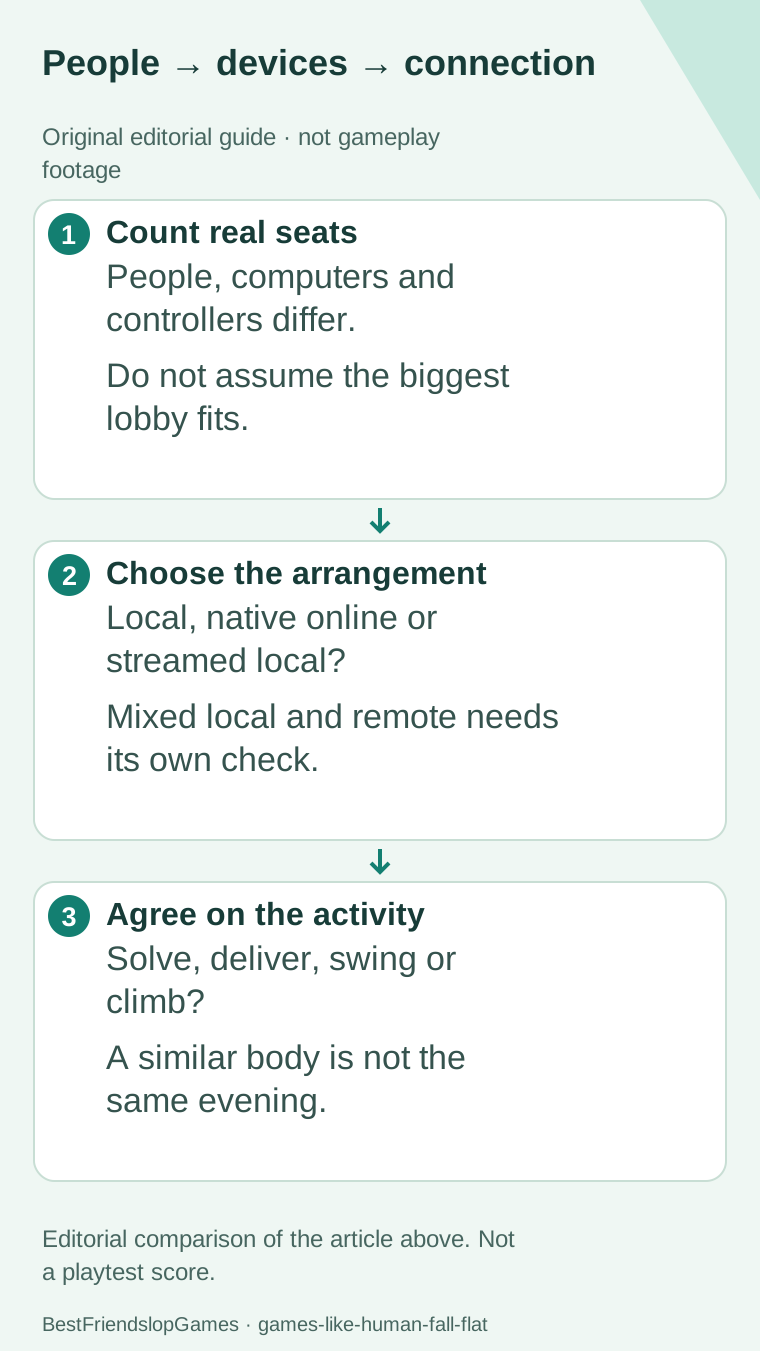
Check the seats before buying the joke
1. Count people, devices and controllers separately. Two people sharing a screen are not necessarily two separate online clients. 2. Choose the activity: solve, deliver, swing or climb. Do not mistake a similar-looking body for the same group objective. 3. Check the connection method for the exact edition. Native online, local play and streamed local play are distinct arrangements.
Our access rule: Sketch the actual seating plan before comparing prices. For example, two people on one sofa plus two friends elsewhere is a mixed arrangement, not merely a request for four players. A listing that advertises local and online modes separately does not settle that mixed case. Keep the purchase on hold until the intended combination is documented or can be checked by someone who already owns the game. This prevents a misleading comparison in which one option is priced for a shared computer while another is priced for four independent machines. The group should compare workable arrangements, not the largest number printed next to each title.
Valve describes Remote Play Together as streaming a supported local multiplayer game from an owning host to friends. One host owns and runs it. That explains Heave Ho's remote option; it does not add seats beyond Heave Ho's own limit or guarantee that a particular connection will feel responsive. Test the host, inputs and connection before committing the whole evening.
Our group rule: Decide whether helping and hindering are both welcome. Some Human Fall Flat groups enjoy a friend disrupting an otherwise obvious solution; others enjoy patiently coordinating until it works. Those are different social agreements even when everyone owns the same game. For this shortlist, name an objective for the first session and agree when to stop deliberately interfering. A delivery can be a shared experiment or a sabotaged errand, and a climb can be a joint challenge or an argument about who caused the fall. This is a suggested group rule, not a feature promised by any developer. It makes the recommendation conditional on how the people actually want to play.
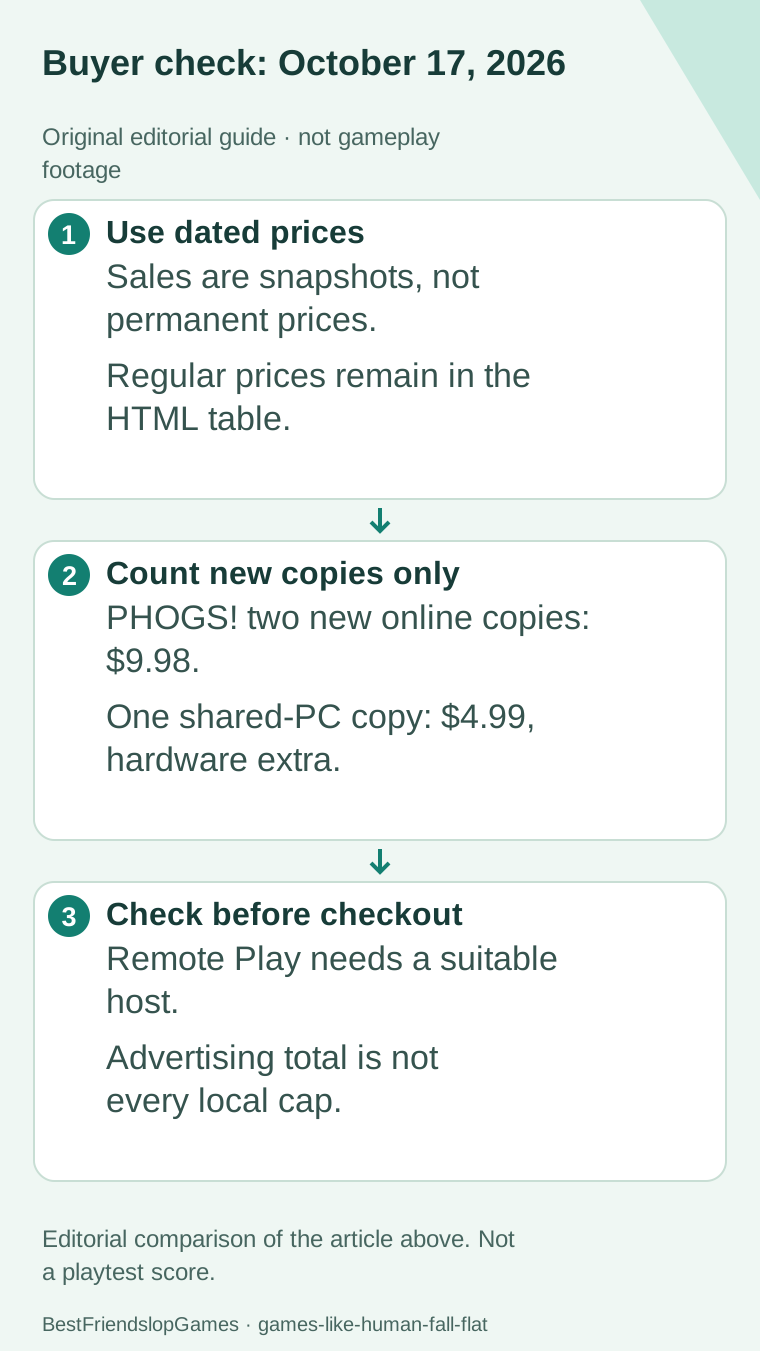
Budget the setup you will actually use
Using the dated prices above, these are purchase examples, not additional player-cap claims:
- PHOGS! for two new native-online owners: 2 × $4.99 = $9.98. One shared-PC base copy is $4.99, excluding hardware.
- Totally Reliable for four new owners: 4 × $1.49 = $5.96. This is a four-copy budget, not a declaration that four is its current maximum.
- Heave Ho on one shared PC or a supported Remote Play Together session: one host copy, $9.99, before controllers or other equipment.
- Chained Together for four new native-online owners: 4 × $3.99 = $15.96.
Our budget rule: Use the cheapest arrangement that actually preserves the intended gathering, not the cheapest-looking line in isolation. If one person already owns a game and has the equipment to host, buying another copy may contribute nothing to tonight's plan. Conversely, a shared-copy option is not a saving if the group specifically wants independent clients and cannot use streaming comfortably. Separate the experiment from the long-term purchase: first establish that the controls, connection and activity suit the people, then decide whether everyone wants individual ownership. The arithmetic here is transparent because it counts new copies, but it is not a value score and does not measure the quality of anybody's evening.
Quick answers
Which is closest to Human Fall Flat's cooperative puzzles?
Our pick is PHOGS! for a pair that wants physical puzzle cooperation. For a larger group that values clumsy object handling more than puzzles, start by checking Totally Reliable Delivery Service's edition and setup. These are editorial fits, not a numerical similarity ranking.
Can Heave Ho be played with distant friends?
Yes, its official Steam listing names Steam Remote Play. Treat that as streaming the local game from a host, not as proof of native online matchmaking. Check controllers and the host's connection first.
Does local plus online mean we can mix both?
Not automatically. Those labels establish two supported modes, not every combination. The table deliberately does not promise mixed local/remote sessions or cross-platform compatibility without separate documentation.
Are all four alternatives suitable for eight friends?
No. Human Fall Flat's documented eight-player online option is not inherited by these alternatives. PHOGS! serves a pair; Heave Ho and Chained Together list four. Totally Reliable's current publisher wording implies five overall, with the local limitation still qualified above. Do not split or exclude friends without agreeing on it first.
All prices and feature checks above are dated October 17, 2026. We have not timed sessions, tested network latency or personally verified every device combination. The diagrams are original explanatory illustrations, not gameplay captures. For a different kind of evening, browse the group-game directory.