Games Like Chained Together: Tethers, Team Sizes and Fall Recovery
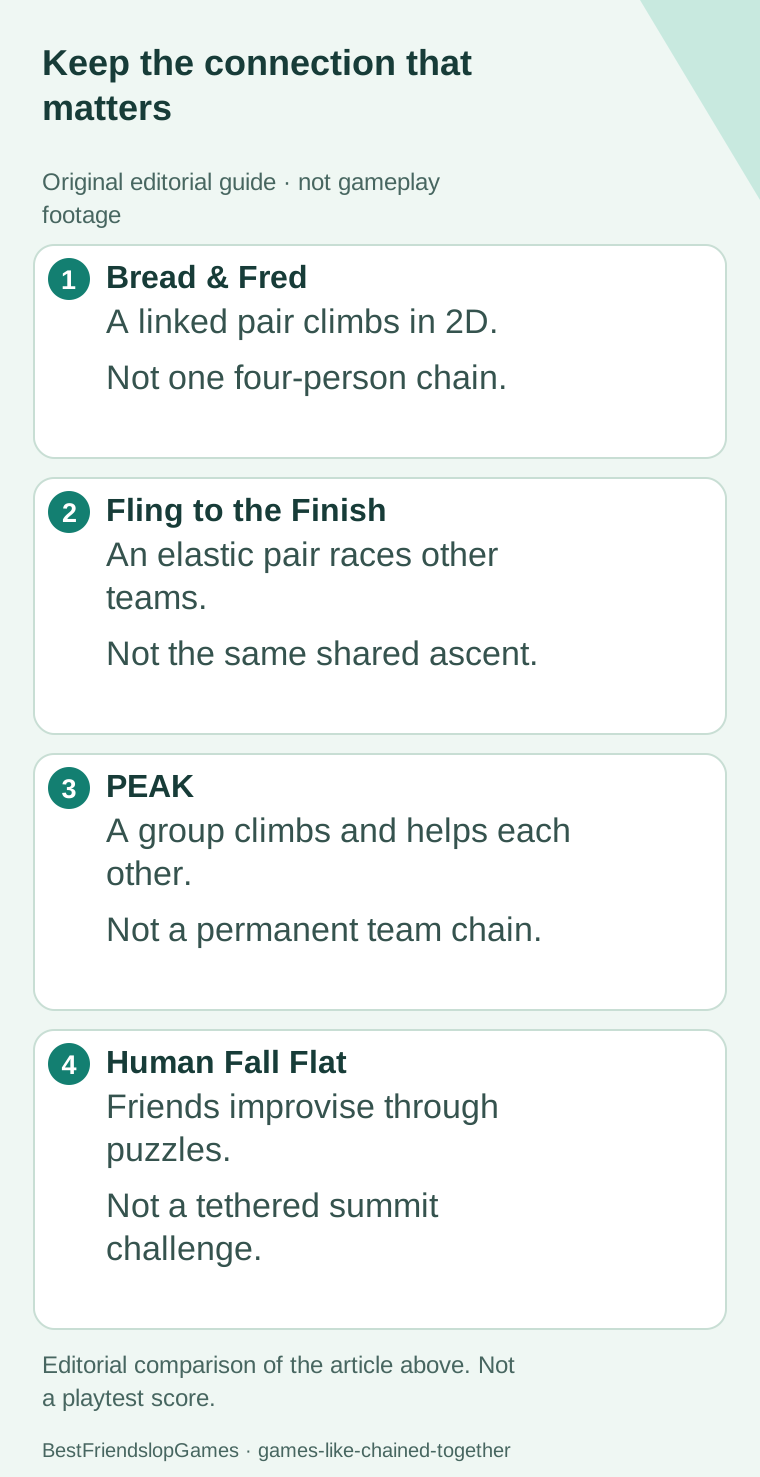
The best games like Chained Together depend on what you want to keep: choose Bread & Fred for a physically linked two-player climb, Fling to the Finish for elastic-rope teamwork in races, PEAK for a four-person summit expedition, or Human Fall Flat for physics puzzles without a permanent tether. None preserves every part of Chained Together. Check the team arrangement as well as the headcount before buying.
Checked October 18, 2026. This guide compares official Steam descriptions, feature lists and US prices; it is not a hands-on review. Platforms below are the desktop versions checked, not an exhaustive console list. Conditional recommendations are our editorial judgments. For the wider directory, see Best Friendslop Games.
Start with the connection you would miss
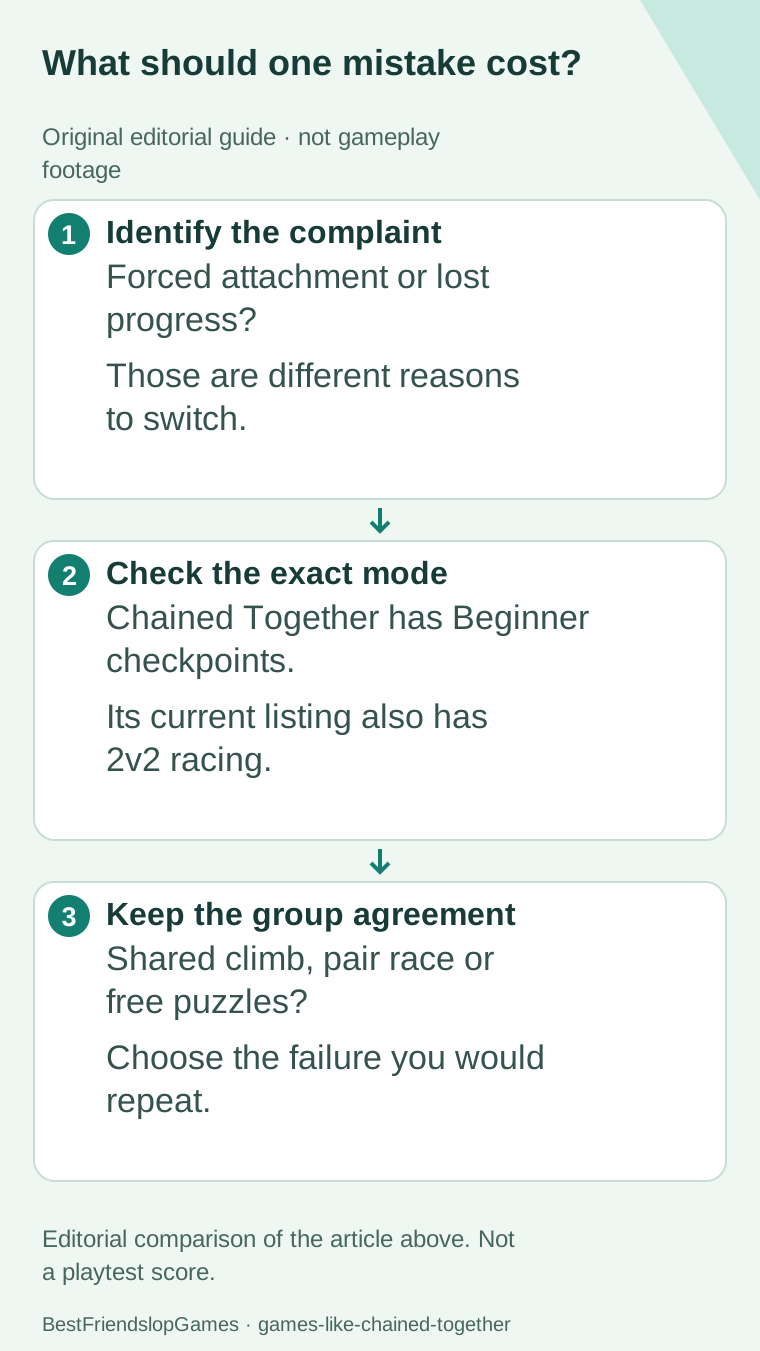
Chained Together's current Steam page describes a 1–4-player climb with local and online cooperation. Its chain can wrap around platforms. Beginner Mode provides checkpoints; Normal and Lava are different difficulty choices, with rising flames in Lava. The same page now advertises a 2v2 Race Mode. It is inaccurate to describe the game as having neither checkpoints nor team racing.
Our selection rule: Ask the group to finish this sentence before looking at a recommendation: “The best part was when we had to…” If the answer is coordinate a jump because someone else was attached, prioritize a physical tether. If it is save somebody near the summit, prioritize climbing and mutual assistance. If it is laugh while finding a ridiculous route, prioritize open-ended physics. These answers can describe the same memorable session, but they do not describe the same replacement. Our shortlist deliberately separates them. The most similar-looking mountain is not automatically the best substitute for a chain, and a rope-based race is not automatically a substitute for one shared ascent.
Players, modes, platforms and dated prices
US Steam base-game prices checked October 18, 2026, before tax. A sale is a dated observation, not a permanent price. Local and online labels do not by themselves establish mixed local-plus-online support or crossplay.
| Game and official source | Verified party arrangement and modes | Checked Steam platforms | Price now; regular price | Main tradeoff |
|---|---|---|---|---|
| Bread & Fred | 2-player cooperation; online and shared/split-screen co-op listed; solo option | Windows, macOS | $14.99; $14.99 | A tethered pair in 2D, not one four-person chain |
| Fling to the Finish | 2 per linked team; local and online races between teams; overall lobby cap not confirmed in the official sources checked | Windows, macOS | $2.99 sale; $19.99 | Elastic-rope racing, not the same shared climb |
| PEAK | 1–4 total; friends-only online co-op, offline solo; no local co-op listed | Windows | $7.99; $7.99 | Climbing and rescue without a permanent team chain |
| Human Fall Flat | Up to 8 online; shared/split-screen listed; two-player local documented in the dated publisher announcement below | Windows, macOS | $19.99; $19.99 | Physical puzzles and routes, not a tethered summit challenge |
Human Fall Flat's local count comes from its August 22, 2019 PC multiplayer announcement, cross-checked against today's split-screen listing. That is a historical official specification, not a new controller test. Fling's two-person team is also corroborated by Daedalic's official product page; it is not a claim that the entire lobby contains only two people.
Bread & Fred: keep the tether, narrow the party
What stays: A climb in which the connection between partners matters. Official mechanics include anchoring, swinging with momentum, and briefly holding walls. The solo alternative attaches the player to a rock.
What changes: The cooperation is a pair in a side-view platformer rather than a four-person 3D chain. Both online and shared/split-screen co-op are listed on the current Steam page; an old “local only” description is not the current feature list.
Our fit judgment: This is the first option to examine when two people specifically miss the negotiation before a jump: who stays put, who moves, and when to release. Reducing the party to a pair makes responsibility easier to identify, but it also removes the extra voices that may have made your original group entertaining. That is a tradeoff, not a universal improvement. A four-person group could form separate pairs, but that would be two activities rather than a preserved shared campaign. Choose this for the relationship between two climbers, not merely because both games have a mountain and the possibility of falling a long way.
Fling to the Finish: keep the rope, change the objective
What stays: Two teammates remain connected by an elastic rope, using it to navigate obstacles and move one another. The official description explicitly supports sharing a controller as one local arrangement.
What changes: Teams race through courses and face opposing teams and disruptive items. The connection is stretchy, and the objective is a finish line rather than the same continuous ascent from Hell. The total lobby maximum remains unverified here; check it before organizing more than one pair.
Our fit judgment: The important switch is who counts as “us.” Within a pair, cooperation is still necessary; across pairs, success can become a contest. That can suit friends who liked the arguments about movement but now want different teams to compare outcomes. It can disappoint a group that wants everybody working toward a single shared victory. Do not sell a race to that group as the identical experience with a new backdrop. Also separate an even-sized gathering from a verified supported lobby: being able to divide six people into three pairs is arithmetic, not evidence that the selected mode accepts those three pairs together.
PEAK: keep the summit, replace forced attachment with assistance
What stays: A shared climbing objective and ways to help other players, including assistance at ledges and placed climbing equipment. Steam specifies invitations for up to three other players, making four people total.
What changes: Stamina, injuries and survival supplies matter. The island layout rotates every 24 hours. This is not a permanent chain joining everybody's movement, and the checked listing offers online cooperation rather than a shared-screen mode.
Our fit judgment: Choose this when the memory you want to repeat is helping the last friend reach safety, rather than being mechanically pulled around by that friend. The distinction changes the conversation: deciding whether to wait, help or prepare a route is different from agreeing on every linked movement. It also changes what “more relaxed” could mean. Removing a permanent chain does not remove pressure when the replacement has survival systems. A group tired of one type of frustration should identify that type before switching. If the complaint was any need to manage risk at all, another dangerous climb is not a reliable solution just because the players are unchained.
For a broader climbing comparison, use the existing games like PEAK guide.
Human Fall Flat: keep physical improvisation, loosen the shared movement
What stays: Physics-based movement, awkward physical problems, and opportunities to manipulate objects with friends. The store describes multiple routes through levels and online play for up to eight.
What changes: The central activity is navigating puzzle environments rather than maintaining a permanent tether while ascending one tower. A larger online capacity is useful only if this different activity is what the group wants.
Our fit judgment: This is the branch for people who enjoy inventing a solution together but want room to try something independently. Without a permanent chain as the organizing rule, the group can discuss a puzzle instead of making every movement a synchronized commitment. That does not mean cooperation is unnecessary or that nobody can interfere with anyone else. It means the reason to coordinate has shifted toward the situation and the objects. For a mixed-confidence group, ask whether watching somebody experiment sounds entertaining or whether everyone needs a clearly assigned movement role. The former points here; the latter may be better served by the explicitly linked pair options.
The existing games like Human Fall Flat page expands the physics-puzzle side of this choice.
Decide what should happen after a mistake
Our group rule: Agree on the acceptable cost of a failed attempt before agreeing on the game. One person may enjoy losing progress because the recovery becomes the story, while another may want frequent opportunities to reset a small problem. Ask for an example of a failure everyone would willingly repeat. Then examine the exact mode, not a reputation such as “rage game” or “cozy climbing.” Start by checking whether Chained Together's existing difficulty choices already address the complaint. Replacing a game is unnecessary if the group wanted a different recovery rule that the current game already offers. This is a discussion framework, not a claim that all four alternatives have the same checkpoint or save system.
Price the actual pair or party
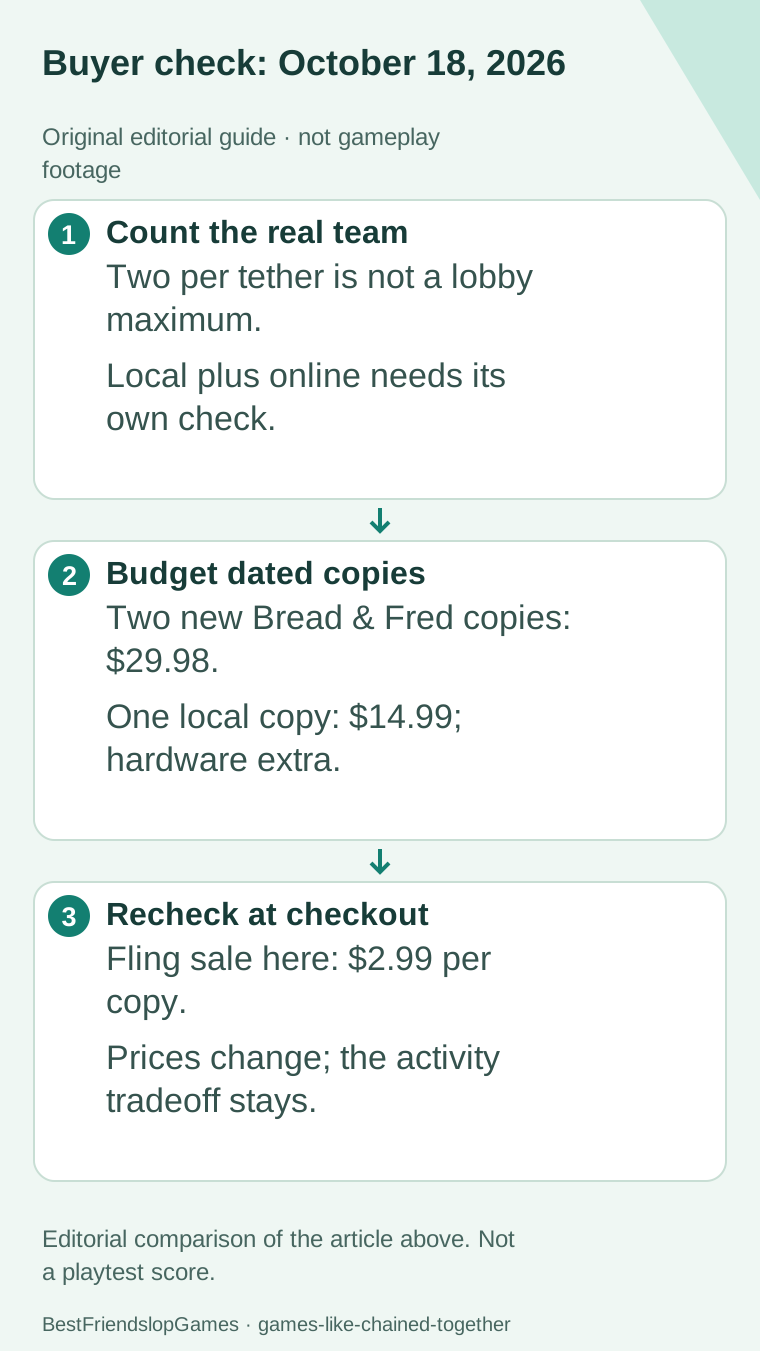
These examples assume everyone needs a new copy for native online play. They are purchase scenarios, not promises about every possible shared-device setup:
- Bread & Fred: 2 × $14.99 = $29.98 for two new online copies; one local copy is $14.99, with suitable hardware still required.
- Fling to the Finish: 2 × $2.99 = $5.98 for one online pair at the checked sale price; one local copy is $2.99. This does not price or verify an entire multi-team lobby.
- PEAK: 4 × $7.99 = $31.96 for a new four-person online group.
- Human Fall Flat: 4 × $19.99 = $79.96 for four new online copies; a two-person local setup needs one $19.99 game copy, plus the appropriate equipment.
Our budget rule: Price the smallest arrangement that actually delivers the evening you described, rather than the largest advertised player number. A cheap pair-based option does not become a cheap replacement for a four-person shared expedition if half the group must sit out or play separately. Conversely, paying for eight possible online seats is unnecessary when only two friends are coming. Subtract copies already owned, decide whether local or native online is intended, and recalculate at checkout. The table's current discounts help with today's comparison but should not become a permanent ranking. A sale can change the purchase cost without changing the fundamental mismatch between a pair race and one cooperative group climb.
Questions to settle before inviting everyone
Which alternative keeps the physical tether?
Bread & Fred and Fling to the Finish both explicitly connect two teammates. Bread & Fred centers on a climb; Fling centers on races. PEAK and Human Fall Flat are included for other shared activities, not as permanent-chain substitutes.
Do we need another game just to race in two teams?
Not necessarily. Chained Together's current official page advertises a 2v2 Race Mode with a 30-minute time limit. Check that existing mode first if team racing is the only missing ingredient you had in mind. Fling remains a different elastic-rope racing option, not proof that Chained Together lacks racing.
Can four people play Bread & Fred together?
The official cooperative premise is two players. Two separate pairs are not one four-person game. For a verified four-person online gathering in this shortlist, PEAK supports four total; Human Fall Flat supports up to eight.
Does a local co-op label also mean mixed local and online play?
No. Separate local and online support does not establish that people sharing one machine can join another machine in the same session. That exact arrangement needs its own verification; none is promised here.
Our access rule: Write the invitation around the confirmed arrangement: how many people, how many devices, which storefront version, and whether they share a screen. A vague “it supports co-op” can hide all four decisions. Where our table leaves a maximum unconfirmed, do not turn the blank into a guess or borrow a number from a different mode. That uncertainty is a reason to check the intended setup before spending, not a reason to pretend the game is unsuitable for every larger group. Keep the recommendation conditional until the actual gathering fits. The goal is to preserve the part of Chained Together your friends liked without quietly changing who gets to participate.
Sources and scope
The linked official Steam pages supply mechanics, feature labels, checked desktop platforms and October 18, 2026 US prices. Daedalic corroborates Fling's linked-pair premise; the dated Human Fall Flat publisher announcement supplies its local count. Editorial comparisons and budget calculations are our own synthesis of those facts. We did not test controllers, connections, crossplay, performance or game difficulty. Prices can change, and a historical announcement is labelled with its original date rather than presented as today's playtest.